


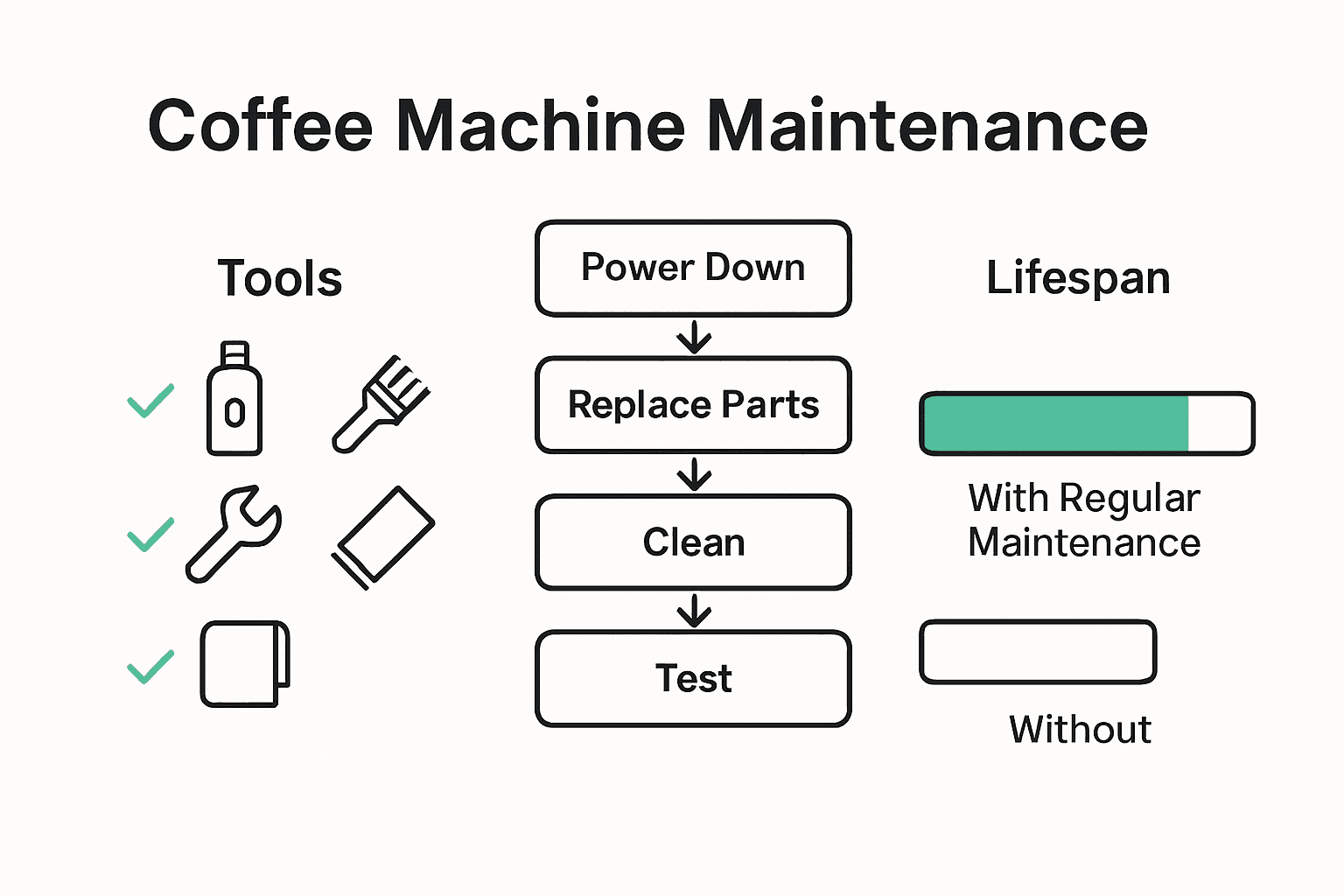
Did you know that regular coffee machine maintenance can extend its lifespan by over 50 percent and save hundreds in unexpected repair costs? Many owners overlook these basic steps, risking flavor quality and expensive malfunctions. With just a few essential tools and a straightforward checklist, you can keep your espresso or coffee maker running smoothly while ensuring every cup tastes fresh.
Table of Contents
- Step 1: Gather Essential Tools And Recommended Parts
- Step 2: Power Down And Prepare The Coffee Machine
- Step 3: Check And Replace Key Wear Parts
- Step 4: Clean Vital Internal And External Components
- Step 5: Test Machine Functionality And Inspect For Leaks
- Step 6: Document Maintenance And Schedule Future Checks
Quick Summary
| Key Point | Explanation |
|---|---|
| 1. Gather Essential Maintenance Tools | Assemble a toolkit including a towel, cleaner, and replacement parts to ensure efficient upkeep. |
| 2. Ensure Safety Before Maintenance | Always unplug the machine and let it cool for at least 30 minutes to prevent burns and injuries. |
| 3. Regularly Replace Key Wear Parts | Inspect and replace components like gaskets every few months to maintain optimal machine performance. |
| 4. Clean Internal and External Components | Daily cleaning, especially of the steam wand, prevents buildup and ensures quality brews. |
| 5. Document Maintenance and Schedule Checks | Keep a detailed log and create a schedule for future maintenance to ensure consistent performance. |
Step 1: Gather Essential Tools and Recommended Parts
Preparing for coffee machine maintenance requires strategic planning and the right equipment. According to espresso service network, you’ll need a targeted set of tools and spare parts to keep your machine running smoothly and prevent unexpected breakdowns.
For your maintenance toolkit, gather these essential items: a soft clean towel, non abrasive cleaner, cleaning brush, flat head screwdriver, and extra portafilter baskets. Espresso service network recommends keeping two sets of dispersion screens and replacement screws readily available for alternating during maintenance cycles. Additional key components to inspect include brew valves, group gaskets, water pipes, pressure switches, steam valves, and pump motors.
When selecting cleaning supplies, opt for gentle products that wo not damage sensitive machine components. Pro tip if you are working on a commercial or home espresso machine always unplug the device before beginning any maintenance work. Your careful preparation now will help prevent costly repairs and extend your coffee machine’s operational lifespan. Learn more about choosing the right coffee machine parts to support your maintenance efforts.
Ready to dive into the actual maintenance process? Grab your toolkit and let us get started.
Step 2: Power Down and Prepare the Coffee Machine
Safety is paramount when performing maintenance on your coffee machine. Espresso service network emphasizes the critical importance of properly powering down and cooling your equipment before beginning any maintenance procedures to prevent potential injuries.
Start by completely disconnecting the machine from its power source. Unplug the device from the electrical outlet and ensure the power cord is safely removed. Allow the machine to cool down for at least 30 minutes, paying special attention to high temperature areas like the group head and steam wand. This cooling period prevents potential burns and allows internal components to reach a safe handling temperature. Coffee machine rebuild workflow guide recommends wearing protective gloves during this initial preparation stage.
Warning: Never attempt maintenance on a machine that is still hot or connected to power. Take your time during this preparation phase and prioritize your personal safety. Each coffee machine has unique specifications, so always consult your specific manufacturer’s manual for precise shutdown and cooling instructions. Once the machine is cool and disconnected, you are ready to begin the detailed maintenance process.
Step 3: Check and Replace Key Wear Parts
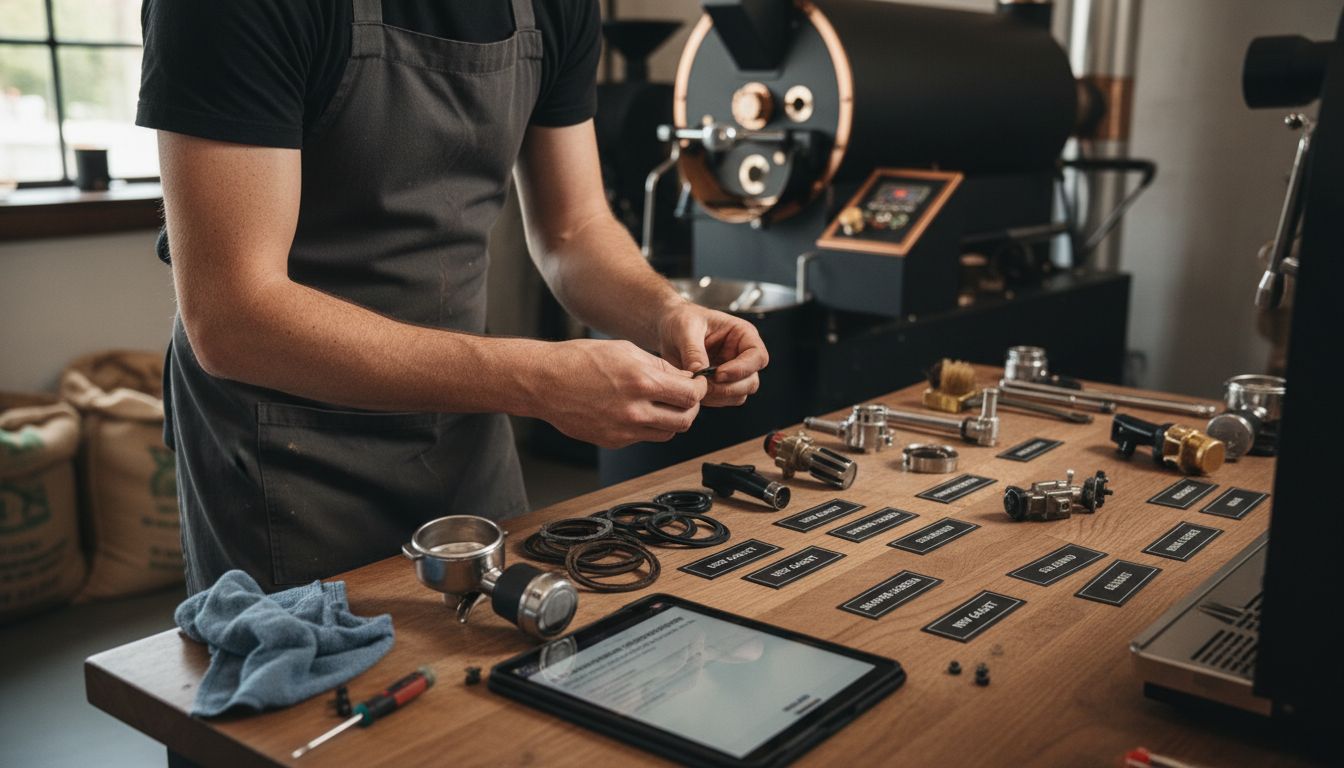
Maintaining your coffee machine requires strategic inspection and timely replacement of critical components. Espresso service network recommends a systematic approach to identifying and replacing wear parts to prevent unexpected breakdowns and maintain optimal machine performance.
Focus on these key components that require regular attention: group gaskets, brew valves, and steam valves. According to the espresso service network, group gaskets should be replaced every three months to ensure a proper seal and prevent wear on the group head and portafilter. Additionally, portafilter gaskets and dispersion screens need replacement every 1 to 2 months. For more complex components like the steam tank, steam valve pin O rings, and brew actuator, plan for inspection and potential maintenance every 6 to 18 months depending on your machine’s usage intensity.
Pro tip: Keep a maintenance log to track when each component was last replaced or inspected. This practice helps you stay ahead of potential issues and ensures consistent coffee machine performance. Espresso machine troubleshooting guide can provide additional insights into identifying early signs of wear. When in doubt about a component replacement procedure always consult your specific machine manufacturer guidelines.
Step 4: Clean Vital Internal and External Components
Cleaning your coffee machine is a critical maintenance task that directly impacts performance and flavor quality. Espresso service network emphasizes the importance of daily and thorough cleaning routines to prevent buildup and maintain optimal machine functionality.
Focus your cleaning efforts on both external and internal components. Start by wiping down the machine body with a soft clean towel and non abrasive cleaner. Pay special attention to the groupheads through a process called backflushing which prevents coffee oil accumulation. According to the espresso service network, steam wands require immediate cleaning after each use to ensure proper hygiene and function. Use a damp cloth to wipe the steam wand thoroughly removing any milk residue and preventing potential bacterial growth.
Pro tip: Invest in specialized cleaning solutions designed for espresso machines to protect sensitive components and maintain performance. How to restore vintage espresso machine can provide additional insights into preserving your equipment through proper cleaning techniques. Remember that consistent maintenance is key to extending your coffee machine’s lifespan and ensuring each brew tastes as perfect as the last.
Step 5: Test Machine Functionality and Inspect for Leaks
After completing maintenance, the final critical step is thoroughly verifying your coffee machine’s operational integrity. Espresso service network recommends a comprehensive testing process to ensure all components function correctly and safely after maintenance procedures.
Begin by performing a test run and brewing a shot of espresso. Carefully observe the extraction pressure and volume to confirm consistent performance. According to the espresso service network, you should meticulously inspect all components for potential leaks especially around critical areas like brew valves, steam valves, and connecting pipes. Pay close attention to water flow patterns look for any unexpected dripping or unusual moisture around connections. Check that steam wands produce consistent steam pressure and that water temperatures remain stable throughout the brewing cycle.
Pro tip: If you detect any irregularities during testing such as inconsistent pressure uneven extraction or unexplained moisture do not continue using the machine. Espresso machine troubleshooting guide can help you diagnose potential issues or determine if professional servicing is required. A thorough final inspection ensures your coffee machine operates at peak performance and prevents potential future breakdowns.
Step 6: Document Maintenance and Schedule Future Checks
The final stage of coffee machine maintenance involves creating a systematic record of your work and planning future service intervals. Espresso service network highlights the critical importance of documenting maintenance activities to ensure consistent machine performance and longevity.
Create a detailed maintenance log that tracks each procedure performed. According to the espresso service network, your documentation should include specific dates, tasks completed, components replaced, and any observations during the maintenance process. Develop a structured maintenance schedule that considers your machine usage frequency. High volume machines will require more frequent checks compared to home espresso systems. Break down your maintenance plan into daily quick inspections, monthly detailed checks, and annual comprehensive service intervals.
Pro tip: Consider using a digital spreadsheet or dedicated maintenance tracking app to simplify record keeping. How to restore vintage espresso machine can provide additional insights into creating an effective maintenance tracking system. Your consistent documentation will not only extend your coffee machine’s lifespan but also help you catch potential issues before they become costly repairs.
Keep Your Coffee Machine at Peak Performance with Trusted Parts and Expert Support
Every coffee lover knows the frustration of a machine that underperforms due to worn gaskets, clogged valves, or inconsistent pressure. This guide highlights the crucial steps for preventative maintenance so your espresso machine can deliver flawless coffee every time. But maintaining optimal performance requires the right tools and high-quality replacement parts designed specifically for your machine model.

Discover a carefully curated selection of premium coffee machine accessories and parts at Coffee Sensor. Whether you need precision temperature sensors, durable group gaskets, or expert advice on restoring vintage espresso machines, our shop provides solutions to extend your equipment’s lifespan and elevate your brewing consistency. Start your maintenance routine today with parts and insights tailored to your needs. Visit Coffee Sensor now and empower every espresso shot with confidence.
Frequently Asked Questions
How often should I perform preventative maintenance on my coffee machine?
You should conduct preventative maintenance on your coffee machine every 1 to 3 months, depending on your usage intensity. For instance, replace group gaskets every three months and inspect internal components every 6 to 18 months.
What tools do I need for coffee machine maintenance?
Gather a soft clean towel, non-abrasive cleaner, cleaning brush, flat head screwdriver, and extra portafilter baskets as essential tools. Be sure to keep additional parts like dispersion screens and screws on hand to make the maintenance process smoother.
What steps should I follow to clean my coffee machine effectively?
To clean your coffee machine effectively, wipe the machine body with a non-abrasive cleaner and regularly backflush groupheads to prevent buildup. Make it a routine to clean the steam wand after each use to ensure hygiene and optimal functionality.
How can I check for leaks in my coffee machine after maintenance?
After maintenance, perform a test run to observe any leaks, focusing on critical areas like brew valves and steam valves. Carefully watch for unusual moisture around connections to identify any potential issues before using the machine extensively.
What should I document in my coffee machine maintenance log?
In your maintenance log, include specific dates, tasks completed, components replaced, and any observations made during maintenance. By recording this information, you can establish a structured maintenance schedule and ensure consistent machine performance.
What are the immediate safety precautions I should take before starting maintenance?
Before starting maintenance, always unplug the coffee machine from the power source and allow it to cool for at least 30 minutes to prevent burns. Wearing protective gloves during the initial preparation stage is also a recommended safety measure.
Recommended
- Espresso Machine Troubleshooting Guide for Peak Performance – Coffee Sensor
- Coffee Machine Rebuild Workflow for Reliable Restoration – Coffee Sensor
- How to Choose Coffee Machine Parts for Optimal Performance – Coffee Sensor
- How to Restore Vintage Espresso Machine for Top Performance – Coffee Sensor
- Preventive Maintenance Checklist for Diesel Injection Pros – My WordPress


