


Did you know that over 80 percent of professional baristas say manual espresso preparation gives them a stronger bond with their craft? Many coffee lovers want more than just convenience from their morning brew. Piston lever espresso machines provide unmatched control and a truly interactive way to extract espresso, turning each shot into a rewarding ritual and helping users develop deeper skill and appreciation for the art of coffee making.
Key Takeaways
| Point | Details |
|---|---|
| Piston Lever Machines Offer Hands-On Control | These machines provide unparalleled control over brewing variables, allowing for a personalized espresso-making experience. |
| Types of Lever Machines | Manual and spring lever machines differ in physical effort required and ease of use, catering to varying skill levels among baristas. |
| Extraction Benefits | Lever machines enable precise manipulation of water pressure and flow rates, enhancing flavor profiles and shot quality. |
| Investment Considerations | While typically more affordable than high-end automatic machines, lever machines require significant skill and practice for optimal use. |
Table of Contents
- What Is A Piston Lever Espresso Machine?
- Types: Manual Vs. Spring Lever Machines
- How Piston Lever Mechanisms Operate
- Key Features And Extraction Benefits
- Pros, Cons, And Cost Considerations
- Comparing Piston Lever To Alternative Systems
What Is a Piston Lever Espresso Machine?
A piston lever espresso machine represents a classic and manually operated approach to crafting espresso, offering coffee enthusiasts unprecedented control over their brewing process. According to research from bean extraction experts, these machines utilize a mechanical lever system that allows users to directly control water pressure and extraction by physically pulling a lever, creating a deeply tactile and personalized coffee-making experience.
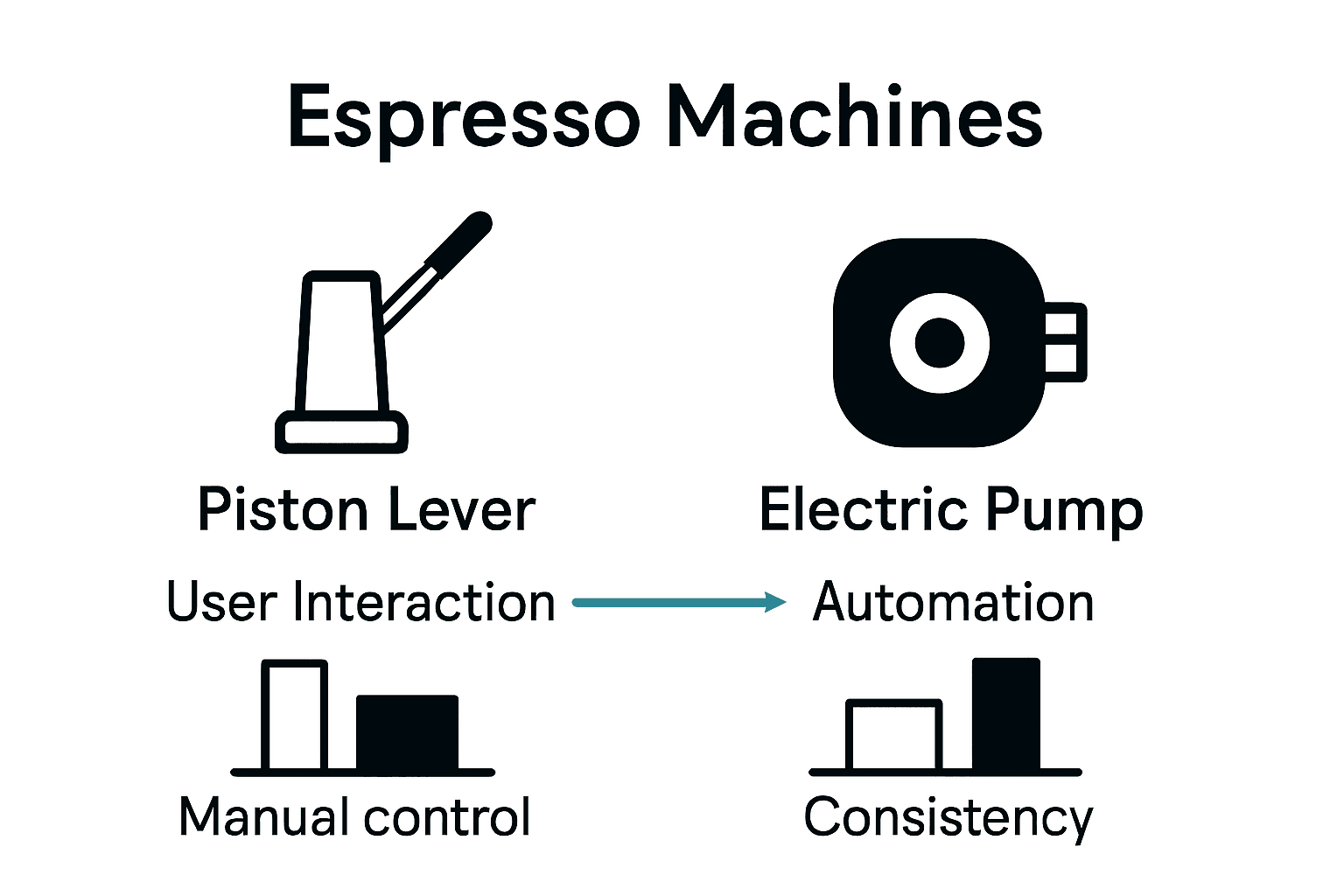
At its core, a piston lever espresso machine functions through a remarkably simple yet ingenious design. The user manually pulls a lever connected to a piston mechanism, which drives pressurized water through finely ground coffee. This mechanical approach differs significantly from electric pump machines, giving baristas complete hands-on control over variables like pressure, flow rate, and extraction time. Explore our guide on espresso machine craftsmanship to understand more about these precision brewing instruments.
The historical significance of piston lever machines cannot be overstated. Originating in the mid-20th century, these machines represent a bridge between traditional coffee brewing and modern espresso techniques. Their design maintains essential espresso machine elements like a grouphead and portafilter while offering a more intimate, craft-driven approach to extraction. Coffee purists appreciate these machines for several key reasons:
- Direct manual control over brewing pressure
- Enhanced ability to feel and adjust extraction in real-time
- Preservation of traditional espresso-making techniques
- Potential for more nuanced flavor development
- A more engaging, hands-on brewing experience
While they require more skill and practice compared to automatic machines, piston lever espresso machines reward dedicated coffee enthusiasts with an unparalleled connection to their brewing process.
Types: Manual vs. Spring Lever Machines
Lever espresso machines are categorized into two distinct types: manual (direct) lever and spring lever machines, each offering unique brewing experiences and challenges for coffee enthusiasts. According to espresso equipment specialists, these two styles represent fundamentally different approaches to manual espresso extraction.
In a manual lever machine, the barista provides all the physical pressure required to extract espresso. This design demands significant skill and strength, as the user must consistently apply pressure through the entire brewing process. Research from espresso experts indicates that direct lever machines provide maximum control, allowing experienced baristas to manipulate pressure profiles precisely. Check out our guide on lever machine upgrades to understand how to optimize these precision instruments.
Spring lever machines introduce a more automated approach to manual brewing. Utilizing a compressed spring mechanism, these machines help standardize extraction by automatically managing pressure once the lever is released. This design offers several advantages over direct lever machines:
- Reduced physical effort during extraction
- More consistent pressure application
- Easier learning curve for new users
- Predictable and repeatable shot quality
- Less strain on the barista’s arm and wrist
While manual lever machines appeal to purists seeking complete control, spring lever machines provide a balance between hands-on brewing and mechanical assistance, making them an attractive option for both home enthusiasts and professional baristas seeking precision and ease of use.
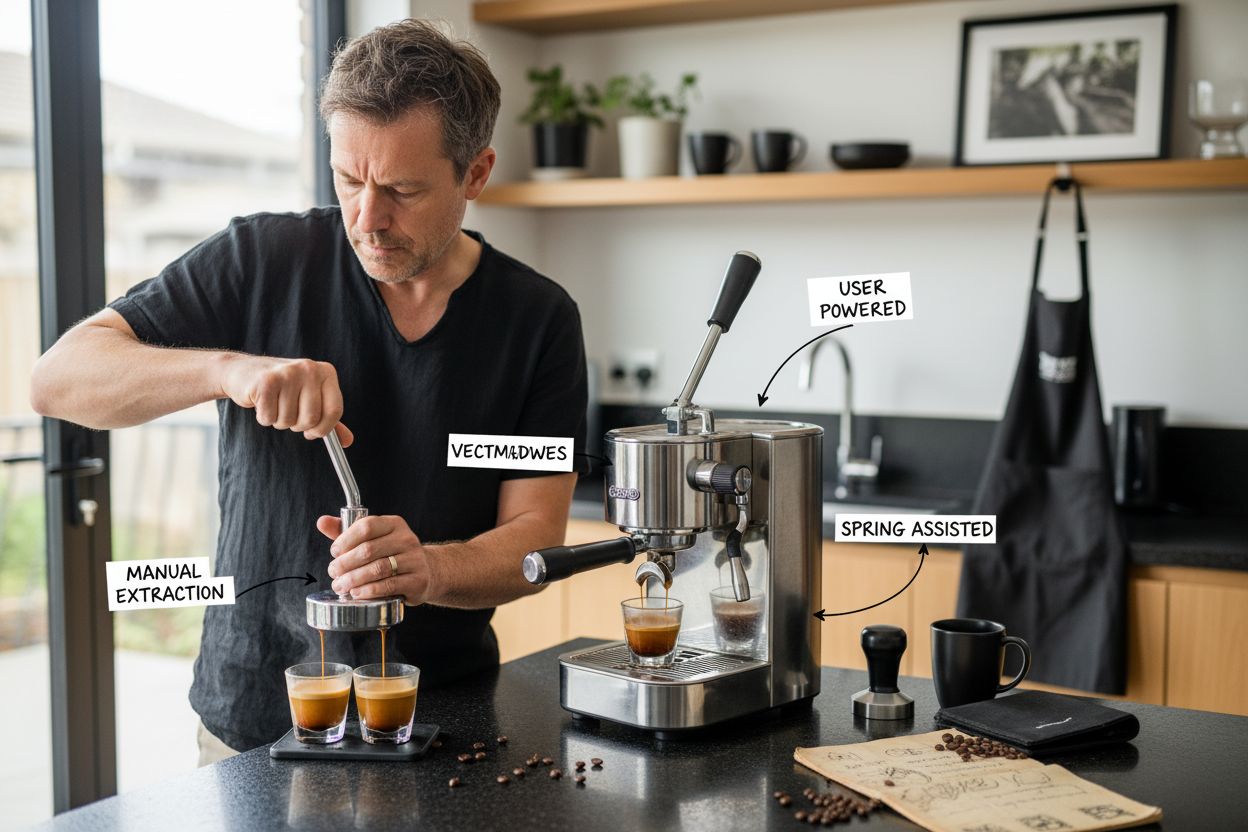
Here’s a comparison of manual and spring lever espresso machines:
| Feature | Manual Lever | Spring Lever |
|---|---|---|
| Pressure Control | Fully manual | Spring-regulated |
| Physical Effort | High | Moderate |
| User Skill Required | Advanced | Moderate |
| Consistency | Depends on operator | More repeatable |
| Learning Curve | Steep | Easier |
| Shot Quality | Highly customizable | Consistent, repeatable |
| Barista Experience | Maximum tactile feedback | Less strain, smoother use |
How Piston Lever Mechanisms Operate
The piston lever mechanism is an ingenious engineering design that transforms manual human effort into precise espresso extraction. According to brewing experts, this mechanism operates through a sophisticated yet straightforward process of mechanical energy conversion, allowing baristas unprecedented control over their espresso preparation.
At the core of the piston lever mechanism is a carefully engineered system involving three primary components: the lever, the piston, and the brewing chamber. When a barista pulls the lever, they activate a mechanical sequence that begins with water being heated in the machine’s boiler. As the lever moves, the piston creates a pressurized environment that forces hot water through finely ground coffee with exceptional precision. Explore our guide on espresso machine craftsmanship to understand the intricate engineering behind these remarkable machines.
The extraction process in a piston lever machine is remarkably nuanced. Unlike electric pump machines with fixed pressure, lever mechanisms allow dynamic pressure management through user interaction. The mechanical design enables baristas to control critical variables:
- Water pressure during extraction
- Flow rate through coffee grounds
- Total extraction time
- Precise pre-infusion techniques
- Subtle pressure profile adjustments
Through this hands-on approach, piston lever machines transform espresso brewing from a mundane task into an art form, giving skilled operators the ability to craft extraordinary shots with remarkable consistency and depth of flavor.
Key Features and Extraction Benefits
Piston lever espresso machines distinguish themselves through a remarkable set of unique features that elevate the coffee brewing experience beyond conventional automated methods. According to coffee brewing experts, these machines represent a pinnacle of manual craftsmanship, offering enthusiasts unprecedented control and engagement with their espresso preparation.
The core features of lever espresso machines are deliberately minimalist yet sophisticated. A typical machine includes a robust manual lever, precision portafilter, and often a steam pressure gauge that allows baristas to monitor extraction dynamics. Explore our guide on lever machine upgrades to understand how these components can be fine-tuned for optimal performance. These machines prioritize hands-on interaction, transforming espresso making from a push-button task into a deliberate, skill-driven ritual.
The extraction benefits of lever machines are profound and multifaceted. Research indicates that skilled users can achieve exceptional results through meticulous pressure control and technique. The key advantages include:
- Ability to create rich, complex flavor profiles
- Generating exceptionally thick, creamy espresso
- Precise manipulation of water pressure during extraction
- Enhanced sensory connection with the brewing process
- Customizable shot characteristics based on manual input
- Potential for developing superior crema
- Reduced reliance on electrical components
Ultimately, lever espresso machines reward patient and passionate coffee enthusiasts with an unparalleled brewing experience that combines mechanical precision, sensory engagement, and the pure artistry of manual espresso preparation.
Pros, Cons, and Cost Considerations
Lever espresso machines present a complex landscape of advantages and challenges that potential buyers must carefully evaluate. According to coffee equipment experts, these machines represent a significant investment in both financial resources and personal brewing skill, requiring a nuanced understanding of their unique operational characteristics.
The economic considerations of lever machines are particularly intriguing. Research indicates that while these machines are typically more affordable than high-end automatic pump models, their pricing can vary significantly based on design complexity and craftsmanship. Check out our guide on lever machine upgrades to understand the potential long-term value of these precision instruments. Manual lever machines often provide exceptional durability due to their minimal electronic components, potentially offering better long-term value compared to more complex automated systems.
A comprehensive analysis reveals several critical pros and cons for potential buyers:
Pros:
- Minimal mechanical parts reducing maintenance complexity
- Superior durability and longevity
- Direct control over extraction process
- Lower initial and long-term maintenance costs
- Enhanced connection to brewing technique
Cons:
- Significant physical effort required
- Steep learning curve for beginners
- Slower shot preparation compared to automatic machines
- Inconsistent extraction without advanced skills
- Limited capacity for rapid consecutive shots
Ultimately, lever espresso machines represent a commitment to craft and precision, appealing to enthusiasts who view coffee preparation as an art form rather than a simple daily ritual. They reward patience, skill, and a genuine passion for exceptional espresso.
Comparing Piston Lever to Alternative Systems
Espresso machine technologies represent a fascinating spectrum of brewing approaches, with piston lever systems standing out as a distinctive and traditional method among various extraction techniques. According to coffee equipment experts, each brewing system brings unique characteristics to espresso preparation, creating a nuanced landscape of brewing possibilities.
The primary alternative systems include electric pump, steam-driven, and air-pump machines, each contrasting sharply with the manual lever approach. Pump-driven machines, the most common in modern cafes, utilize electric mechanisms to generate consistent 9-bar pressure with minimal user intervention. Explore our guide on machine upgrades to understand the technological distinctions between these systems. In contrast, lever machines demand direct human interaction, transforming espresso brewing from an automated process to a deliberate, skill-intensive craft.
Key comparative aspects between piston lever and alternative systems include:
Piston Lever Advantages:
- Precise manual pressure control
- Enhanced flavor profile manipulation
- Direct tactile brewing experience
- Minimal electronic component dependency
- Potential for unique extraction techniques
Alternative System Strengths:
- Consistent pressure generation
- Faster shot preparation
- Lower physical effort required
- More predictable extraction results
- Easier learning curve for beginners
Ultimately, the choice between piston lever and alternative systems reflects a brewer’s philosophical approach to espresso—whether prioritizing technological convenience or embracing the artisanal, hands-on brewing ritual.
Take Full Control of Your Lever Espresso Machine Performance
Do you love the hands-on experience of a piston lever espresso machine but feel frustrated by inconsistent extractions, unreliable pressure readings, or worn-out components that hold you back? After reading about the challenges and artistry of manual espresso—from achieving the perfect pressure control to maintaining optimal machine performance—you know that even small issues can impact your results. Get the reliability and precision you need without sacrificing the authentic touch that makes lever espresso special.

Elevate your craft today. At Coffee Sensor you will find a curated selection of pressure gauges, temperature sensors, gaskets, and upgrades perfectly matched for iconic machines like La Pavoni and Olympia Cremina. Restore smooth lever motion, fine-tune extraction variables, and unlock richer flavor in every cup with our proven parts and accessories. Discover our expert insights and step-by-step guidance on manual machine improvement with our espresso machine craftsmanship guide and learn more about custom upgrades for your lever machine.
Why wait to enhance your espresso journey? Explore Coffee Sensor now and see how quality parts can transform your hands-on brewing today.
Frequently Asked Questions
What is a piston lever espresso machine?
A piston lever espresso machine is a manually operated device that allows users to control the espresso brewing process through a mechanical lever system. This design offers hands-on control over water pressure and extraction time, leading to a personalized coffee-making experience.
How does a piston lever espresso machine function?
These machines operate by having the user pull a lever connected to a piston, which then forces heated water through finely ground coffee. This manual process enables baristas to adjust variables like pressure and flow rate during extraction.
What are the differences between manual lever and spring lever machines?
Manual lever machines require the user to apply all the pressure needed for espresso extraction, demanding more skill. In contrast, spring lever machines use a compressed spring mechanism to help standardize pressure, making them easier for new users while still retaining some manual control.
What are the advantages of using a piston lever espresso machine?
Piston lever machines offer direct control over extraction, resulting in customizable flavor profiles and enhanced crema. They also foster a deeper connection to the brewing process, allowing enthusiasts to develop precision techniques, although they require more physical effort and skill than automatic machines.
Recommended
- Brewing The Perfect Espresso: Exploring the Art and Science of Espresso – Coffee Sensor
- Elevate Your Espresso Experience: Exploring Coffee Sensor Upgrades for La Pavoni Machines – Coffee Sensor
- Are you sure you want to buy a La Pavoni lever machine guide
- La Pavoni Lever custom made solid stainless piston
- Τί είναι espresso μηχανή: Μια βαθιά κατανόηση – ΞΥΔΑΣ ΕΥΡΑΓΟΡΑ – Οι καλύτεροι στην αγορά. Μεγάλες προσφορές στις Ηλεκτρικές Συσκευές


