


{
“@type”: “Article”,
“author”: {
“url”: “https://coffee-sensor.com”,
“name”: “CoffeeSensor”,
“@type”: “Organization”
},
“@context”: “https://schema.org”,
“headline”: “How to Choose Coffee Machine Parts for Optimal Performance”,
“publisher”: {
“url”: “https://coffee-sensor.com”,
“name”: “CoffeeSensor”,
“@type”: “Organization”
},
“inLanguage”: “en”,
“articleBody”: “Learn how to choose coffee machine parts step by step to enhance espresso quality, machine functionality, and long-term reliability for any setup.”,
“description”: “Learn how to choose coffee machine parts step by step to enhance espresso quality, machine functionality, and long-term reliability for any setup.”,
“datePublished”: “2025-10-22T12:08:19.542Z”
}
Did you know that a poorly matched coffee machine part can cut appliance lifespan by up to 40 percent? Every cup of quality coffee starts with reliable equipment, yet many home baristas overlook the small details that truly matter. Taking a careful approach to choosing coffee machine parts not only protects your investment but also keeps your morning brew tasting its best. Understanding how to assess your machine now can set you up for consistent performance and fewer headaches in the future.
Table of Contents
- Step 1: Assess Your Coffee Machine’s Needs And Model
- Step 2: Identify Critical Parts For Performance And Upgrades
- Step 3: Evaluate Compatibility And Brand-Specific Requirements
- Step 4: Compare Quality, Material, And Supplier Reputation
- Step 5: Test Selected Parts For Fit And Optimal Functionality
Quick Summary
| Key Point | Explanation |
|---|---|
| 1. Assess machine specifics first | Understand your coffee machine’s model and requirements to choose compatible parts effectively. |
| 2. Identify critical performance parts | Focus on key components that directly influence functionality, like heating elements and pump pressure. |
| 3. Ensure compatibility with genuine parts | Select original components to maintain performance and prevent potential safety issues. |
| 4. Evaluate quality and material specifications | Prioritize parts made from high-grade materials for durability and efficiency. |
| 5. Test parts for fit and functionality | Perform dry fit tests to guarantee the new components integrate seamlessly with your machine. |
Step 1: Assess Your Coffee Machine’s Needs and Model
Choosing the right coffee machine parts starts with understanding your specific machine’s unique requirements. This crucial first step will help you select components that perfectly match your equipment’s specifications and performance needs.
Begin by examining your coffee machine thoroughly. According to technical research from Accio, you want to identify key specifications like heating element temperature range, pump pressure requirements (which typically range between 9 and 15 bar for espresso systems), and material standards such as NSF certified stainless steel grades.
Document your machine’s make and model meticulously. Take detailed notes about its current condition including age, usage frequency, and any visible wear signs. Are you sure you want to buy a La Pavoni lever machine guide can provide additional insights for specific machine types.
Track your machine’s maintenance history as recommended by Almenhaz Coffee Supplies. Note daily cleaning routines, weekly scrubbing practices, and past descaling efforts. This documentation helps determine which parts require immediate replacement and which can wait.
Pro Tip: Photograph your machine’s internal components and serial number. These visual references will prove invaluable when sourcing precise replacement parts.
Next, you will compile your machine’s technical specifications to prepare for targeted part selection. Understanding these details ensures you invest in components that will enhance rather than compromise your coffee machine’s performance.
Step 2: Identify Critical Parts for Performance and Upgrades
Now that you have assessed your coffee machine’s specifications, it is time to pinpoint the essential components that drive superior performance. Understanding which parts directly impact your machine’s functionality will help you make smart upgrade and replacement decisions.
According to research from Accio, several key components are crucial for optimal coffee machine performance. These include the portafilter, brew group, steam wand, heating element, pump, drip tray, and grinder components like conical burrs. Each plays a vital role in maintaining temperature stability, pressure consistency, and overall energy efficiency.
Focus first on the core performance parts. As recommended by the Espresso Coffee Shop spare parts guide, prioritize critical elements such as gaskets, group head seals, pressure valves, and heating elements. These OEM parts ensure precise fit, consistent heat and pressure control, and safe machine operation.
Gaggia Classic or Pro brew pressure gauge adapter kit can help you monitor one of these critical performance indicators directly.
Pro Tip: Always choose parts that match your specific machine model exactly. Generic replacements might compromise performance and potentially damage your equipment.
Next, you will learn how to evaluate each component’s condition and determine whether repair or replacement is necessary. By understanding these performance critical parts, you are setting the stage for a more efficient and reliable coffee machine.

Here’s a summary of the most critical coffee machine parts and their impact on performance:
| Component | Role in Performance | Replacement Priority |
|---|---|---|
| Portafilter | Holds ground coffee Directs water flow |
Medium |
| Brew Group | Extracts coffee Heat stability |
High |
| Steam Wand | Froths milk Dispenses steam |
Medium |
| Heating Element | Maintains water temperature Thermal efficiency |
High |
| Pump | Provides pressure Controls extraction |
High |
| Group Head Gasket | Seals water circuit Prevents leaks |
High |
| Pressure Valve | Regulates pressure Ensures safety |
High |
| Grinder Burrs | Grinds beans Impacts extraction |
Medium |
Step 3: Evaluate Compatibility and Brand-Specific Requirements
With your critical performance parts identified, the next crucial step is ensuring absolute compatibility between replacement components and your specific coffee machine. Choosing the right parts goes far beyond simple measurements and requires careful consideration of brand-specific design requirements.
According to the Espresso Coffee Shop spare parts guide, using non-genuine aftermarket parts can create significant risks. These include potential misalignment with machine tolerances, increased leak possibilities, warranty voiding, and compromises to both safety and coffee quality. Your goal is to find parts that integrate seamlessly with your machine’s exact specifications.
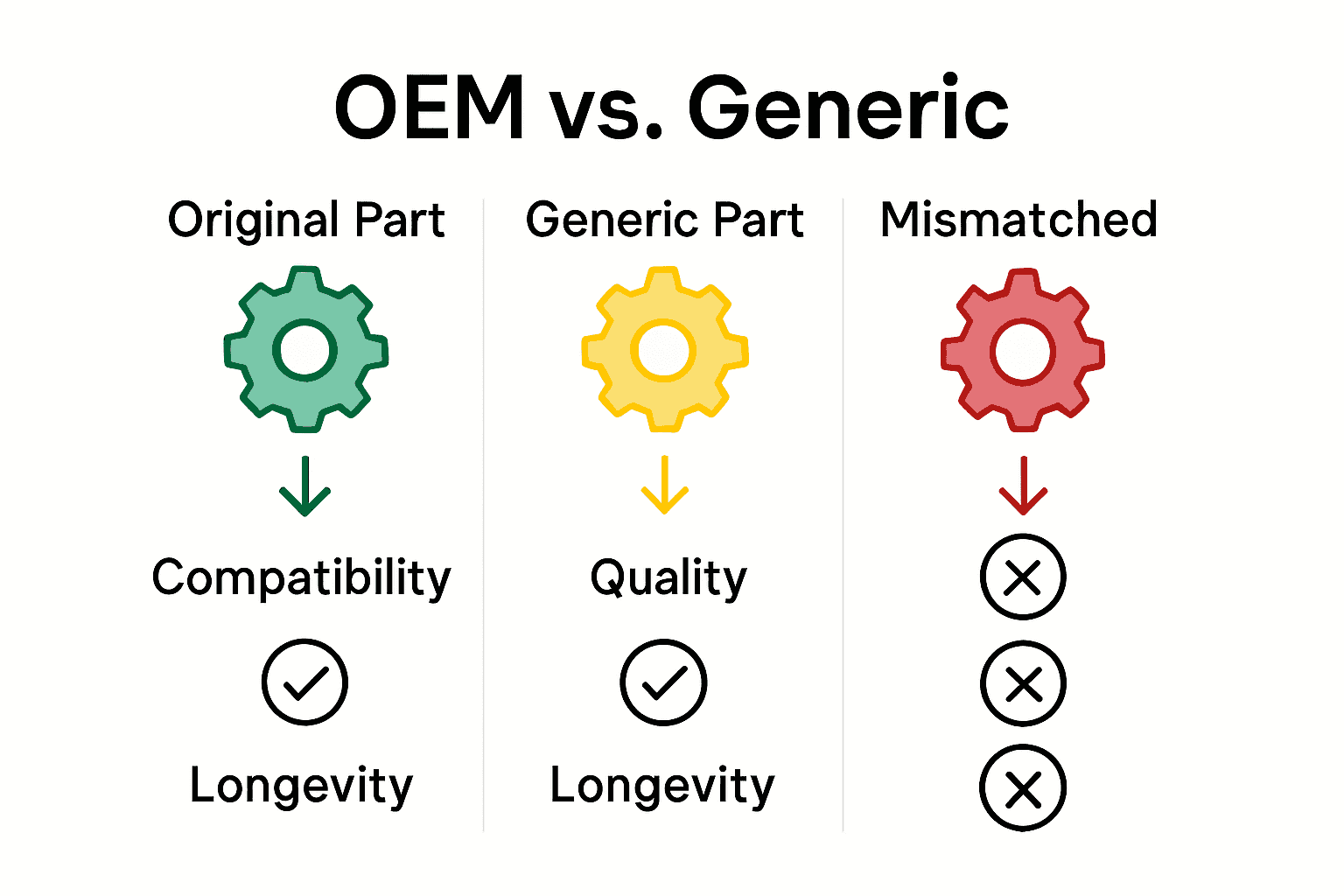
Manufacturers like Nuova Simonelli emphasize the importance of selecting original spare parts from official partners. This approach ensures component synergy, maintains performance standards, preserves safety, and protects your machine’s long-term efficiency and value. Parts for Coffee Machines – Coffee Machine Accessories can help you navigate these specific requirements.
Start by thoroughly documenting your machine’s exact model number, serial number, and manufacturing year. Compare these details against manufacturer specifications when sourcing replacement parts. Pay special attention to tolerances, materials, and connection interfaces that might vary between different machine generations.
Pro Tip: When in doubt, contact the manufacturer directly or consult an authorized dealer to verify part compatibility before making any purchases.
Next, you will learn how to source these precisely matched components while protecting your machine’s performance and warranty. Understanding brand-specific requirements is your key to maintaining a high-performing coffee machine.
Step 4: Compare Quality, Material, and Supplier Reputation
After identifying compatible parts, you must carefully evaluate their quality, material specifications, and the reputation of potential suppliers. This critical step ensures you invest in components that will genuinely enhance your coffee machine’s performance and longevity.
According to research from Accio, comprehensive quality assessment involves multiple key factors. Look for technical specifications such as NSF or ISO certifications, material hardness ratings, wattage, and pressure ratings. These technical details provide concrete insights into a part’s potential performance and durability.
Focus on material quality as a primary consideration. As the Accio component analysis suggests, prioritize parts made from grade 304 or 316 stainless steel and FDA-approved silicone. These materials offer superior thermal efficiency, consistent flow rates, and long-term reliability. Gaggia Classic or Pro brew pressure gauge adapter kit represents an example of a precisely engineered component meeting these rigorous standards.
Evaluate supplier credentials meticulously. Check for ISO 9001 certifications, material quality documentation, and track records of reorder rates and warranty support. Reliable suppliers typically provide comprehensive performance data, including thermal recovery metrics and energy efficiency benchmarks.
Pro Tip: Request first-article inspection reports and statistical process control documentation from suppliers to validate the consistent quality of their components.
Next, you will learn how to make the final selection by balancing performance, cost, and long-term machine reliability. Understanding these quality assessment techniques empowers you to make informed parts selection decisions.
Step 5: Test Selected Parts for Fit and Optimal Functionality
With your carefully selected parts ready, the final step is to verify their precise fit and functional performance. This crucial testing phase ensures your new components will seamlessly integrate and enhance your coffee machine’s overall operation.
According to Accio research, dimensional compatibility is paramount. For instance, verify specific measurements like portafilter diameter (typically 58 mm) and request CAD files for custom parts to confirm exact specifications. Parts for Coffee Machines – Coffee Machine Accessories can provide additional guidance on precise measurements and compatibility.
The Espresso Coffee Shop spare parts guide emphasizes that genuine parts should deliver precision fit without requiring complex adjustments. During testing, check for consistent heat distribution, pressure regulation, and smooth mechanical interaction between the new component and existing machine parts.
Begin your testing protocol by performing a dry fit test. Carefully place the new part in its intended location, checking alignment, connection points, and potential interference with surrounding components. Look for smooth insertion, secure mounting, and no unexpected resistance or gaps.
Pro Tip: Request after-sales technical documentation and defect warranties before final installation. This provides additional protection and support during your initial testing phase.
Next, you will transition from testing to final installation, armed with the confidence that your selected parts meet the highest standards of quality and performance. Your methodical approach ensures optimal functionality for your coffee machine.
Upgrade Your Coffee Machine with Precision Parts for Peak Performance
Finding the perfect coffee machine parts can feel overwhelming when you want to maintain consistent temperature, pressure, and flawless extraction. This article highlights the challenge of identifying compatible, high-quality components like gaskets, heating elements, and pressure valves that truly enhance your espresso setup rather than causing leaks or performance drops. If you are tired of guessing and worrying about poor fit or downgrades, there is a solution that takes the guesswork out of your upgrades.

Explore our curated selection at Coffee Sensor where every part is carefully matched to top brands like La Pavoni and Olympia Cremina. Whether you need genuine replacement parts, precision temperature sensors, or pressure gauge adapter kits, we help you restore, upgrade, and customize your machine with confidence. Make sure you do not settle for generic parts that risk your machine’s longevity. Visit Parts for Coffee Machines – Coffee Machine Accessories now to find components tested for exact fit and outstanding durability. Take action today to protect your investment and enjoy better espresso extraction tomorrow.
Frequently Asked Questions
How do I assess my coffee machine’s needs before buying parts?
Start by examining your coffee machine’s model, condition, and maintenance history. Document important specifications such as heating element temperature range and pump pressure requirements to ensure the parts you choose will fit and function optimally.
What are the critical parts for optimal coffee machine performance?
Focus on essential components like the brew group, heating element, and pressure valve, as they significantly impact your machine’s operation. Prioritize replacing high-impact parts first to enhance performance and reliability.
How can I ensure the compatibility of replacement parts with my coffee machine?
To verify compatibility, document your machine’s exact model and compare it against manufacturer specifications. Ensure parts match in tolerances, materials, and design features to prevent performance issues.
What materials should I look for when choosing coffee machine parts?
Prioritize components made from high-quality materials such as NSF-certified stainless steel and FDA-approved silicone, which enhance durability and thermal efficiency. Focus on parts that meet rigorous material standards for best performance.
How can I test the fit and functionality of new coffee machine parts?
Perform a dry fit test by placing the new part in its intended location to check for alignment and secure connection. Look for a smooth insertion and ensure there’s no resistance or gaps; this will indicate if the part is suitable for installation.
What should I do if a part does not fit correctly?
If a part does not fit as expected, remove it and double-check the measurements for dimensional compatibility. Adjust your selection based on your findings, ensuring you choose parts that meet the necessary specifications to avoid performance issues.


