


Most people are surprised to learn that the language around espresso is as complex as the brewing process itself. For many american coffee lovers, unraveling this intricate vocabulary turns an everyday habit into a deeper appreciation for the craft. Mastering espresso terminology not only makes you sound like a pro at your local café, but also helps you navigate the equipment, recipes, and techniques that define the world’s most celebrated coffee style.
Table of Contents
- Defining Industry Terms in Espresso
- Types of Espresso Machine Jargon Explained
- Key Components and Parts Terminology
- Common Brewing and Extraction Terms
- Mistakes to Avoid When Using Espresso Terms
Key Takeaways
| Point | Details |
|---|---|
| Understanding Espresso Terminology | Familiarizing yourself with espresso-specific terms enhances both brewing technique and appreciation for the craft. |
| Espresso Machine Components | Recognizing parts such as the group head and portafilter allows for better machine operation and maintenance. |
| Extraction Techniques | Mastering methods like tamping and pre-infusion is crucial for achieving a balanced flavor in your espresso shots. |
| Avoiding Common Mistakes | Being aware of frequent mispronunciations and misuse of terms can elevate your credibility in coffee conversations. |
Defining Industry Terms in Espresso
Navigating the world of espresso requires understanding its unique terminology. According to Wikipedia, espresso is more than just a coffee drink – it’s a precise brewing method with specific technical language that professionals and enthusiasts use to describe everything from extraction techniques to machine components.
Key espresso industry terms span several crucial categories. Brewing Components include technical elements like portafilter (the handled basket holding ground coffee during extraction), group head (where pressurized water meets coffee grounds), and tamper (the tool used to compress ground coffee). Extraction Characteristics describe the quality and flavor profile, with terms like crema (the golden-brown foam layer on top of a well-pulled shot), extraction time (typically 25-30 seconds), and shot volume (usually 1-2 ounces).
From General Warfields Coffee, we learn about specialized espresso drink variations that expand basic terminology. These include espresso lungo (a longer pulled shot with more water), espresso macchiato (espresso with a small amount of steamed milk), and critical quality descriptors like over-extraction (when coffee is pulled too long, resulting in bitter flavors) and under-extraction (when coffee is pulled too quickly, producing weak, sour tastes). Understanding these terms transforms casual coffee drinking into a nuanced appreciation of the craft.
The espresso lexicon continues to evolve, reflecting the technical precision and artistry behind every perfectly pulled shot. While mastering these terms takes time, they provide a shared language for communicating the subtle complexities of this beloved brewing method. Whether you are a home barista or professional coffee technician, knowing these industry terms will elevate your understanding and appreciation of espresso.
Types of Espresso Machine Jargon Explained
Espresso machines are complex systems with a rich technical vocabulary that can be overwhelming for newcomers. Wikipedia provides insight into the various machine types that define the espresso brewing landscape, each with its own specialized terminology and operational characteristics.
Machine Types represent the fundamental categories of espresso equipment. According to the research, these include piston-driven machines (which use manual lever mechanisms), steam-driven machines (utilizing steam pressure for extraction), and pump-driven machines (the most common modern type using electric pumps to generate consistent pressure). Each type has distinct technical components like the grouphead (where water meets coffee grounds) and the portafilter (the removable basket holding ground coffee during brewing).
From General Warfields Coffee, we explore additional technical terminology essential for understanding espresso machine mechanics. Boiler systems are critical components, with terms like single boiler, heat exchange, and dual boiler describing how machines manage water temperature. Pressure-related jargon becomes crucial, with terms like bar pressure (typically 9 bars for optimal extraction) and pre-infusion (a technique of gradually introducing water to coffee grounds) providing nuanced understanding of extraction processes.
Understanding these technical terms transforms espresso machine operation from mysterious to manageable. While the vocabulary might seem intimidating initially, each term represents a specific aspect of brewing science.
Whether you’re a home enthusiast or professional barista, mastering this jargon allows deeper appreciation of the intricate engineering behind every perfect espresso shot.
Key Components and Parts Terminology
Understanding the intricate anatomy of an espresso machine requires familiarity with its core components. Wikipedia provides a comprehensive breakdown of the essential parts that transform water and coffee grounds into a perfect espresso shot.
The grouphead stands as a critical junction in espresso machine design. This component is where pressurized hot water meets finely ground coffee, creating the magic of extraction. Connected to the grouphead, the portafilter serves as the removable basket that holds ground coffee during brewing. It’s designed to withstand high pressure and ensure even water distribution. Another crucial component is the steam wand, used for steaming and frothing milk, allowing baristas to create complex milk-based espresso drinks like cappuccinos and lattes.
Additional specialized components enhance the espresso preparation process. The Wikipedia knockbox entry highlights an often-overlooked but essential tool – the knockbox. This device provides a convenient place to dispose of spent coffee grounds after extraction, keeping the workspace clean and organized. Water reservoirs, heating elements, and pressure gauges work together to create the precise conditions needed for perfect espresso extraction. Each component plays a specific role, from maintaining consistent water temperature to ensuring the right brewing pressure.

The world of espresso machine components is a fascinating blend of engineering and culinary art.
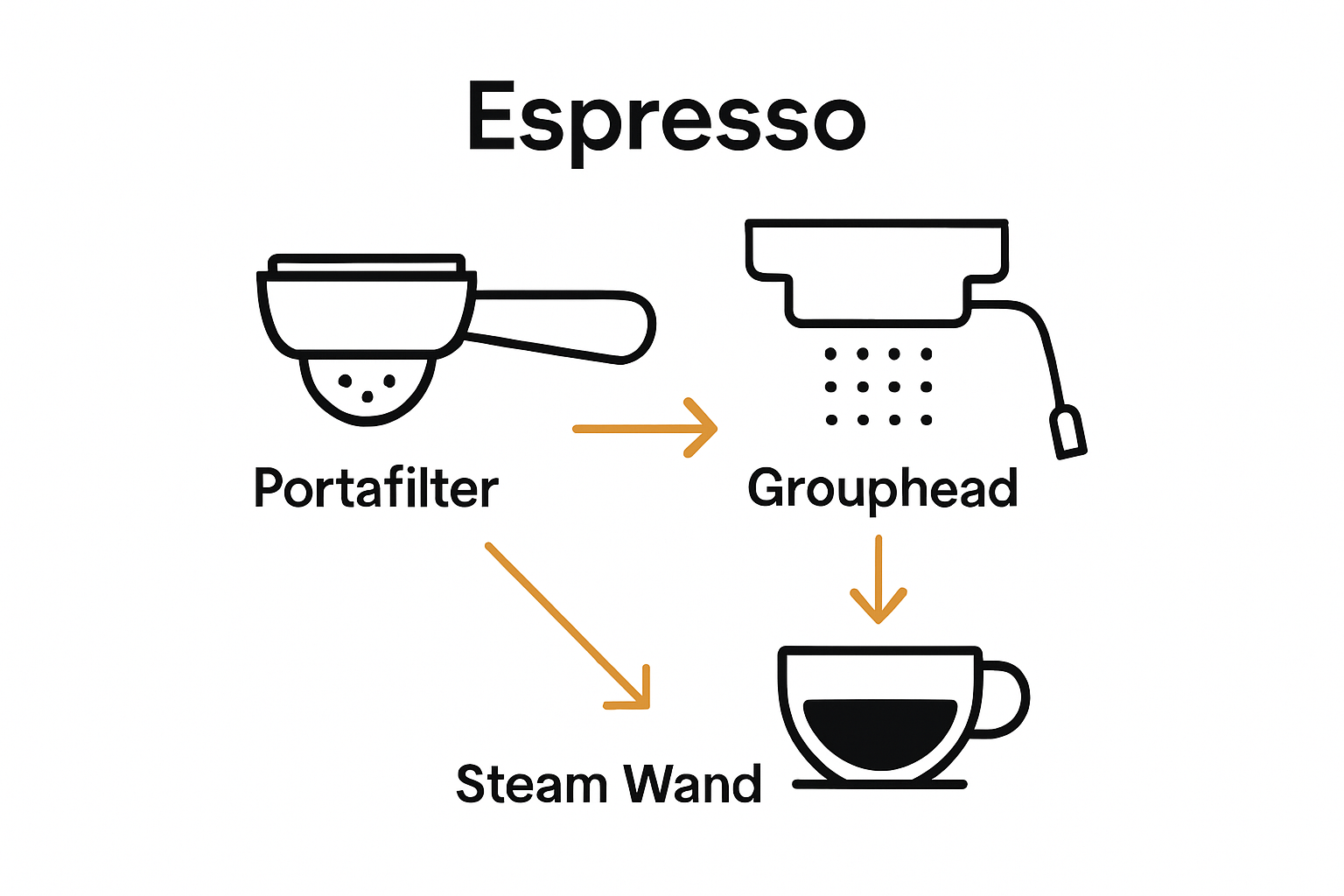 These parts work in harmony, transforming simple ingredients into a complex and delightful beverage. For enthusiasts and professionals alike, understanding these components opens a window into the sophisticated mechanics behind every delicious espresso shot.
Common Brewing and Extraction Terms
The art of espresso brewing involves a sophisticated vocabulary that defines the nuanced process of transforming coffee grounds into liquid gold. Wikipedia reveals the critical techniques that separate an average shot from an exceptional one.
Tamping represents one of the most fundamental extraction techniques. This process involves carefully compressing ground coffee in the portafilter to create a uniform, dense coffee bed that ensures even water distribution during brewing. Extraction time is another crucial term, typically ranging between 25-30 seconds, which directly impacts the shot’s flavor profile. Pre-infusion emerges as a sophisticated technique where water is gradually introduced to the coffee grounds before full pressure extraction, allowing for more balanced and complex flavor development.
From General Warfields Coffee, we explore additional critical extraction terminology. Espresso profiling describes the strategic manipulation of pressure and flow during extraction, allowing baristas to highlight specific flavor characteristics. Over-extraction and under-extraction represent opposite ends of the brewing spectrum – the former producing bitter, harsh flavors, while the latter results in weak, sour shots. These terms illustrate the precision required in crafting the perfect espresso.
Mastering these brewing and extraction terms transforms espresso preparation from a simple task to a nuanced craft. Understanding the subtle interactions between grind size, tamping pressure, water temperature, and extraction time allows enthusiasts to approach espresso making with the precision of a scientist and the creativity of an artist. Whether you’re a home barista or professional, these terms provide the foundational language for understanding the complex world of espresso extraction.
Mistakes to Avoid When Using Espresso Terms
Wikipedia highlights the nuanced world of espresso terminology, where precision and accuracy can separate knowledgeable enthusiasts from casual coffee drinkers. Navigating this linguistic landscape requires understanding common pitfalls and misconceptions that can undermine your credibility in coffee conversations.
One of the most prevalent errors is the widespread mispronunciation of espresso itself. Many people mistakenly say expresso, which is not a correct term. Drink classification represents another critical area prone to misunderstandings. Wikipedia reveals subtle distinctions between similar beverages that novices often conflate. For instance, cortado and gibraltar are frequently used interchangeably, though they have distinct preparation methods and origins. Professional baristas and serious enthusiasts understand these nuanced differences and can articulate them precisely.
Technical terminology demands even greater attention. Misusing terms like extraction, crema, or tamping can reveal an amateur’s lack of understanding. Common mistakes include describing over-extracted coffee as simply “strong” or under-extracted coffee as merely “weak” without understanding the specific chemical and flavor transformations occurring during brewing. Precision matters. Saying a shot has “good crema” without explaining its color, consistency, and what it indicates about extraction quality demonstrates superficial knowledge.
Mastering espresso terminology is more than memorizing definitions. It’s about understanding the context, nuance, and technical complexity behind each term. Whether you’re a home barista or aspiring coffee professional, developing a sophisticated vocabulary transforms your approach from casual consumption to informed appreciation. By avoiding these common linguistic traps, you’ll communicate more effectively and demonstrate genuine expertise in the rich world of espresso.
Elevate Your Espresso Knowledge and Machine Performance Today
Mastering espresso industry terms like tamper, crema, and pre-infusion is essential for any coffee enthusiast or professional aiming to craft the perfect shot. If you relate to the challenge of understanding complex espresso jargon and want to translate that knowledge into consistently exceptional brewing results you need more than theory. Precise tools and quality machine parts play a crucial role in unlocking your espresso’s full potential.

Discover how the right components can transform your espresso experience at Coffee Sensor. From temperature sensors and pressure gauges to custom upgrades compatible with beloved brands like La Pavoni and Olympia Cremina our selection empowers you to optimize extraction and maintain machine consistency. Don’t just understand espresso terms understand how to apply them with professional-grade accessories and restorations. Take your espresso craft to the next level and shop now at Coffee Sensor and start brewing with confidence today.
Frequently Asked Questions
What is the difference between a portafilter and a group head in an espresso machine?
The portafilter is the removable basket that holds ground coffee during brewing, while the group head is the component where pressurized water meets the coffee grounds during extraction.
How does extraction time affect the flavor of espresso?
Extraction time, typically 25-30 seconds, directly influences the flavor profile of espresso. A shorter extraction time may lead to under-extraction, resulting in sour flavors, while a longer time can cause over-extraction, creating bitter notes.
What are common mistakes when using espresso terminology?
Common mistakes include mispronouncing ‘espresso’ as ‘expresso’ and confusing drink classifications, such as mislabeling a cortado and a gibraltar. Additionally, using vague terms like ‘strong’ or ‘weak’ without understanding the underlying extraction process can mislead the conversation.
What is crema, and why is it important in espresso?
Crema is the golden-brown foam layer that forms on top of a well-pulled shot of espresso. It is an indicator of a properly extracted shot and contributes to the overall flavor and texture of the coffee.


