


Did you know that lever espresso machines give users up to 100 percent manual control over extraction pressure compared to automatic models? This isn’t just about making coffee. It’s about achieving richer flavors and mastering a timeless brewing ritual. Whether you love precise craft or want a deeper connection to every espresso shot, understanding these classic machines opens the door to a more personal and rewarding coffee experience.
Table of Contents
- Defining Lever Espresso Machines And Core Concepts
- Types Of Lever Machines: Spring Vs. Direct Lever
- How Lever Espresso Machines Operate
- Benefits And Challenges For Home Baristas
- Comparing Lever And Pump Espresso Machines
- Maintenance, Upgrades, And Common Mistakes
Key Takeaways
| Point | Details |
|---|---|
| Lever Espresso Machines Provide Control | Manual lever systems allow baristas to adjust pressure during extraction for enhanced flavor. |
| Types of Lever Machines | Spring lever machines offer consistency, while direct lever machines provide complete manual control for skilled baristas. |
| Benefits for Home Baristas | Lever machines offer superior espresso quality, but come with a steep learning curve requiring practice and patience. |
| Maintenance is Crucial | Regular upkeep, including cleaning and component checks, is essential for optimal performance and longevity of lever machines. |
Defining Lever Espresso Machines and Core Concepts
A lever espresso machine represents a classic, hands-on approach to brewing espresso that transforms the entire coffee extraction process into a manual, precision-driven experience. According to research from coffee experts, these machines utilize a manual lever mechanism to generate pressure for extracting espresso, allowing baristas unprecedented control over the pressure profile during brewing.
At its core, a lever espresso machine operates through a beautifully simple mechanical principle. The barista manually pulls down a large lever, which forces hot water through finely ground coffee at a carefully controlled pressure. Defining Piston Lever Espresso Machines Explained reveals that this method differs dramatically from automatic machines by giving the user direct, tactile control over each shot’s extraction.
Key characteristics of lever espresso machines include:
- Direct manual pressure generation
- Ability to modulate water pressure during extraction
- Enhanced flavor complexity through precise control
- Typically constructed with high-quality metal components
- Preferred by enthusiasts seeking a more artisanal brewing method
These machines represent more than just a brewing tool they’re a gateway to understanding coffee extraction at its most fundamental level. By allowing baristas to feel and adjust the exact pressure applied during brewing, lever machines transform espresso making from a mechanical process into a true culinary art form.
Types of Lever Machines: Spring vs. Direct Lever
Lever espresso machines fundamentally divide into two primary categories: spring lever and direct lever machines, each offering a unique approach to espresso extraction. According to research from Perfect Daily Grind, these machine types differ dramatically in how they generate and manage pressure during the brewing process.
Spring lever machines utilize an internal calibrated spring mechanism that applies consistent pressure throughout the extraction. As research indicates, this design provides a more standardized brewing experience, with the spring automatically managing the pressure profile. This means less skill is required from the barista, making spring lever machines more approachable for home enthusiasts who want reliable, repeatable espresso shots.
Direct lever machines, by contrast, demand a more hands-on approach. Unveiling the Art of Espresso Crafting: The Allure of Lever Coffee Machines highlights that these machines require the barista to manually apply and control pressure throughout the entire extraction. This method offers several distinct advantages:
- Complete manual control over pressure profile
- Ability to customize each shot’s extraction
- More tactile and engaging brewing experience
- Greater potential for extracting nuanced flavor notes
- Preferred by experienced baristas and coffee enthusiasts
Ultimately, the choice between spring and direct lever machines comes down to personal preference, skill level, and desired brewing experience.
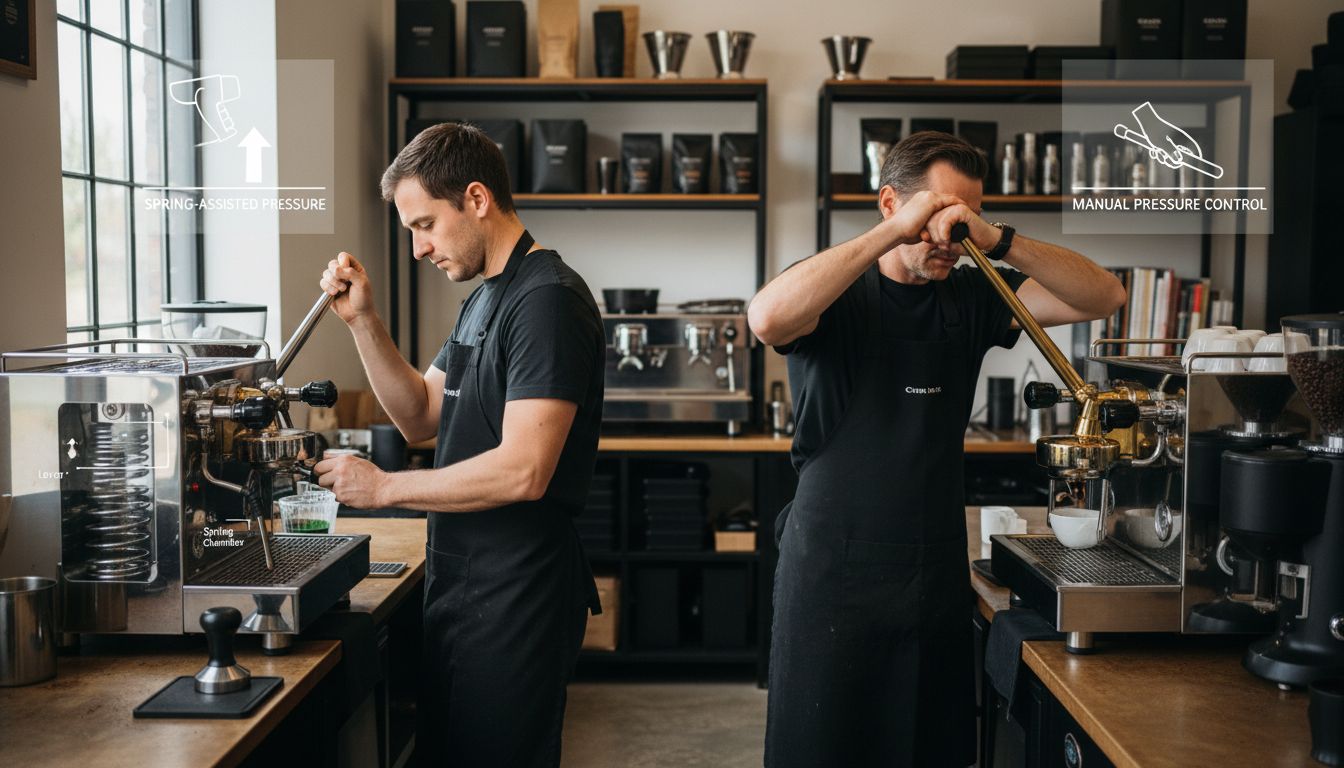 While spring levers offer consistency, direct levers provide an unparalleled level of control that transforms espresso making from a routine task into a true artisan craft.
Here’s a comparison of spring lever and direct lever espresso machines:
| Feature | Spring Lever Machines | Direct Lever Machines |
|---|---|---|
| Pressure Generation | Calibrated internal spring | Manual force from barista |
| Consistency of Extraction | High, repeatable | Depends on user skill |
| Skill Requirement | Lower, more approachable | Higher, demands experience |
| Pressure Control | Automated by spring | Full manual adjustment |
| User Experience | Standardized and reliable | Tactile and engaging |
| Ideal For | Home enthusiasts Beginners |
Experienced baristas Artisans |
How Lever Espresso Machines Operate
Lever espresso machines represent a fascinating intersection of mechanical engineering and culinary art, transforming the espresso extraction process into a hands-on, precision-driven experience. According to research from The Coffee Bazaar, these machines operate through two primary mechanisms: spring piston and direct lever systems, each offering a unique approach to generating brewing pressure.
In a spring piston lever machine, the brewing process begins when the barista pulls the lever downward, which compresses an internal spring. When released, this spring automatically applies consistent pressure to force hot water through the coffee grounds. This design provides a more predictable extraction, making it easier for less experienced baristas to produce consistent espresso shots. Are you sure you want to buy a La Pavoni lever machine guide highlights the nuanced mechanics behind this innovative brewing method.
The extraction stages in lever espresso machines typically include:
- Initial pre-infusion of coffee grounds
- Gradual pressure build-up
- Consistent water flow through the coffee bed
- Final pressure release and shot completion
Direct lever machines, in contrast, require the barista to manually maintain pressure throughout the entire extraction process. This demands more skill but offers unprecedented control, allowing experienced baristas to adjust pressure dynamically and extract more nuanced flavor profiles from their coffee grounds. The mechanical simplicity of lever machines transforms espresso brewing from a push-button task into an interactive, artisanal craft.
Benefits and Challenges for Home Baristas
Lever espresso machines represent a fascinating journey for home baristas, offering an unparalleled brewing experience that blends technical skill with culinary artistry. According to research from Era of We, these machines provide home enthusiasts with greater control over extraction variables, potentially leading to superior espresso quality, but not without significant challenges.
The benefits of lever espresso machines for home baristas are substantial. Brewing The Perfect Espresso: Exploring the Art and Science of Espresso highlights the unique advantages these machines offer:
- Complete manual control over extraction pressure
- Ability to customize each espresso shot’s flavor profile
- More intimate connection with the brewing process
- Potential for developing advanced barista skills
- Higher quality espresso compared to automatic machines
However, the path to mastery is not without its challenges. According to Barista Life, manual lever machines demand significant practice and skill to achieve consistent results. Beginners may find the learning curve steep, requiring patience, physical effort, and a willingness to experiment. The manual nature means each shot depends entirely on the barista’s technique – from applying consistent pressure to understanding coffee grind characteristics.
Ultimately, lever espresso machines are not just brewing tools but gateways to a deeper understanding of coffee extraction. They transform espresso making from a push-button task into an engaging, hands-on craft that rewards dedication, precision, and passion.
Comparing Lever and Pump Espresso Machines
Espresso machine technology presents two distinct approaches to brewing: lever and pump-driven systems, each with unique characteristics that fundamentally transform the espresso extraction process. According to Perfect Daily Grind, these machines represent dramatically different philosophies of coffee preparation, catering to different skill levels and brewing preferences.
Lever machines shine in their manual pressure control, offering an artisanal approach that appeals to coffee purists. Elevate Your Espresso Experience: Exploring Coffee Sensor Upgrades for La Pavoni Machines highlights the nuanced control these machines provide. Key differences include:
- Manual vs. automated pressure application
- Greater user control in lever machines
- More consistent extraction in pump machines
- Higher skill requirement for lever machines
- Potential for more complex flavor profiles
Pump-driven machines, in contrast, represent the pinnacle of convenience and consistency. These automated devices apply steady, predictable pressure, making them ideal for coffee shops and home baristas seeking reliable results with minimal technical skill. While they sacrifice some of the artisanal control of lever machines, they compensate with ease of use and reproducibility.
Ultimately, the choice between lever and pump machines comes down to personal preference, skill level, and brewing philosophy. Some enthusiasts relish the hands-on craftsmanship of lever machines, while others appreciate the straightforward reliability of pump-driven systems. Both approaches have their merits, reflecting the rich diversity of espresso brewing traditions.
Maintenance, Upgrades, and Common Mistakes
Lever espresso machines are precision instruments that demand careful maintenance and thoughtful operation. According to research from China Mach Pro, these machines require consistent upkeep to preserve their exceptional brewing capabilities and prevent performance degradation.
Routine maintenance is critical for ensuring optimal machine performance. 7 Popular Espresso Machine Parts Every Barista Should Know highlights the key areas home baristas should focus on:
- Regular cleaning of group heads
- Periodic replacement of seals and gaskets
- Lubricating moving mechanical components
- Checking spring tension in lever mechanisms
- Descaling to prevent mineral buildup
Common mistakes can significantly impact espresso quality. Baristas often struggle with inconsistent pressure application, insufficient machine preheating, and neglecting critical maintenance tasks. These errors can lead to underwhelming shots, increased wear on machine components, and reduced overall performance. The manual nature of lever machines means that user technique plays a crucial role – small variations in pressure, grind consistency, and preparation can dramatically alter the final espresso extraction.
Ultimately, mastering a lever espresso machine is a journey of continuous learning. Treat your machine as a precision instrument, invest time in understanding its mechanics, and approach maintenance with the same care and attention you’d give a fine musical instrument. The reward is consistently exceptional espresso that reflects your growing skill and dedication.
Master Your Lever Espresso Machine With Precision Parts and Expert Support
If you are passionate about the manual control and craftsmanship that lever espresso machines demand you already know how critical precise pressure and consistent extraction are for perfect espresso shots. The challenges of mastering pressure control and maintaining your machine can feel daunting but they are exactly what separates a great shot from a mediocre one. Enhancing your lever espresso machine with high-quality parts like temperature sensors, custom gaskets, and pressure gauges can unlock new levels of flavor and consistency.

Start transforming your espresso experience today by exploring the specialized accessories and restoration services available at Coffee Sensor. Whether you use a La Pavoni or Olympia Cremina lever machine you will find tailored solutions designed to improve your control and machine performance. Don’t let maintenance struggles or lack of precision hold back the art you can create. Visit Coffee Sensor now and take the next step to perfect every shot. For detailed insights about upgrading your lever machine mechanics check out our guides like Are you sure you want to buy a La Pavoni lever machine guide. Unlock the full potential of your espresso craftsmanship today.
Frequently Asked Questions
What is a lever espresso machine?
A lever espresso machine is a manual brewing device that allows baristas to generate pressure by pulling a lever, enabling precise control over the espresso extraction process.
What are the key differences between spring lever and direct lever espresso machines?
Spring lever machines utilize a calibrated internal spring to maintain consistent pressure during extraction, making them more approachable, while direct lever machines require manual pressure application, offering greater control to experienced baristas.
What are the benefits of using a lever espresso machine for home brewing?
Lever espresso machines provide advantages such as complete manual control over extraction, the ability to customize flavor profiles, and a deeper connection to the brewing process, often resulting in higher-quality espresso compared to automatic machines.
What maintenance is required for a lever espresso machine?
Routine maintenance includes cleaning group heads, replacing seals and gaskets, lubricating mechanical components, checking spring tension, and descaling to prevent mineral buildup, all vital for optimal performance.
Recommended
- Defining Piston Lever Espresso Machines Explained – Coffee Sensor
- Are you sure you want to buy a La Pavoni lever machine guide
- Elevate Your Espresso Experience: Exploring Coffee Sensor Upgrades for La Pavoni Machines – Coffee Sensor
- Brewing The Perfect Espresso: Exploring the Art and Science of Espresso – Coffee Sensor


