

From: 160,00 €
 i
 i
 i
 i
 i
 i
 i
 i
 i
 i
Thank you for submitting a review!
Your input is very much appreciated. Share it with your friends so they can enjoy it too!
 SV
Shipping fast, helpful information during purchase process, will buy again and recomend to othes.
 DE
Hello! English is not my native language, so I'll post this review in german. Schon vorab mein Fazit: "1A" !!! Dies war nicht mein erster Kauf bei "Coffee Sensor", und wieder bin ich sehr zufrieden! Das bestellte Teil ist qualitativ hochwertig angefertigt, und sehr sorgsam verpackt; dazu mit wirklich allem (selbst Dicht-Band), was man dann braucht. Dazu kommt ein sehr sehr netter und hilfsbereiter Service seitens Coffee-Sensor! (=> Ich empfehle in diesem Zusammenhang auch die exzellenten Videos von Coffee-Sensor im Netz...) Ja, und letztlich der Versand ist auch überaus flott. Daher nochmal jetzt zum Ende mein Fazit: "1A" !!!
 GB
I have installed a titanium Isolator and AirBuster release valve on two post millenium Professional machines. Prior to purchasing these, I had in mind a specific problem I wished to solve. The roastery from which I regularly purchase coffee specifies a 1 to 5 scale for roast level, where 1 is the lightest possible roast. Most coffees are offered at roast level 2 or 3. Generally, for roast level 2 coffees, I have not worried so much about temperature. The hot grouphead temperature has given me good experiences with these coffees, if a little hit and miss at times. However, for level 3 roasts, I have regularly experienced the overheating problems described by so many other La Pavoni lever machine users. I spent some time reading various reviews etc of the Isolator and AirBuster before purchasing. I have previously purchased a number of items from Coffee Sensor, so that I knew the manufacturing quality would be good. I initially hesitated, though, because I wanted to be absolutely confident that my adding these components to my machines would not solve one set of problems but create other new ones. Whilst not irreversible, you'd really want these adjustments to be permanent. I'm sure we all have different tastes in coffee. I want to be able to make good coffee typically using beans roasted to the levels 2 and 3 I already described. I should add that these levels both represent comparatively light roasts, so that differences in treatment needed to be detailed and accurate for me to feel that I had gained anything. I decided on the titanium Isolator because I did not really need the grouphead temperature to come down too far between cups. Also, I appreciate the durability of titanium. So, it should be borne in mind that I have not experienced any of Isolator, AirBuster or Piston Pressure Kit in isolation. Once installed, it was immediately clear that the Isolater does its job, as described on the Coffee Sensor website and elsewhere, as does the AirBuster. Incidentally, I am delighted with the latter, in that input/output ratios are now consistent where they certainly weren't previously. The AirBuster has solved that problem. What was a bit of a shock, from installing both items at once, is that the overall behaviour of the grouphead has radically changed. If the AirBuster is not directly about temperature control, it is about what the water is doing within the grouphead dynamically. I have had to completely revise my thinking. It's not just that I have control over more parameters, but e.g. if I want to get the grouphead up to temperature for a level 2 roast, of course I can achieve that by flushing water through prior to pulling a cup of coffee. However, I am now so aware of how tight a window I have to get the temperature just right. Hence, I have completely revised even minute details of my coffee-making process. It took me three days to come to terms with everything I have described after installing on my first machine. I have just installed on my other and am going through the process again, albeit this time with a little more understanding of what to expect. I have known for a long time that grouphead temperature readings, obtained via external thermocouples, suggest that grouphead heat conduction is inconsistent between machines. No reason why La Pavoni should have considered that to be important, I guess. Already, having used my second machine for just two days with its new components, I am clear that I am better placed to deal with idiosyncrasies between the two machines. As an aside, I had not previously considered buying the Piston Pressure Kit, but it is a prerequisite for AirBuster installation. I would now not wish to be without it. It has proved truly enlightening. I am now constantly aware of the pressure readings whilst pulling cups of coffee. I should also mention that I find Coffee Sensor's attention to detail in production of this equipment quite wonderful. Knurling on the new bolts for attaching grouphead to body via the Isolator is first class. There are flats on the new lever arm for tightening/loosening. I have certainly had a handle become very tight on my previous lever arm. This is all great to see. After all of that, I am absolutely clear that the quality of my coffee-making has become significantly more consistent. I'm absolutely delighted. I will post this on both the Isolator page and the AirBuster page. As I mentioned, I don't really have a clear perception of how the two items behave independently.
 US
All the pieces I received were high quality and incredible upgrade for my gen 1 Pavoni. Great business to work with! Excellent communication and very eager to assist. Thank you!
 SE
airbuster is essential. i didn’t realize it before i tried it, but pavonis have a real issue with steam buildup in the grouphead. gauge is also nice. it definitely helps achieving consistent results
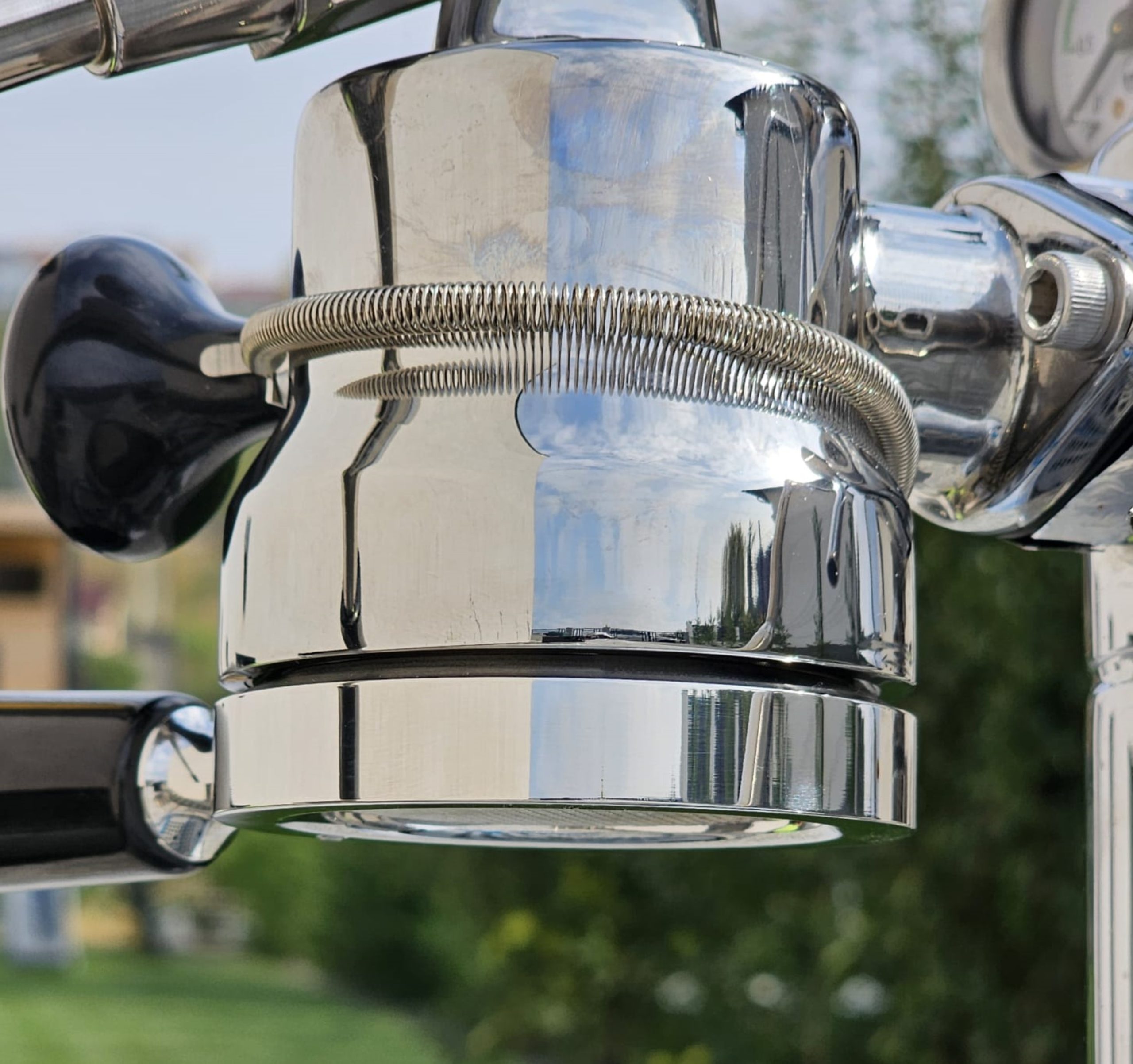
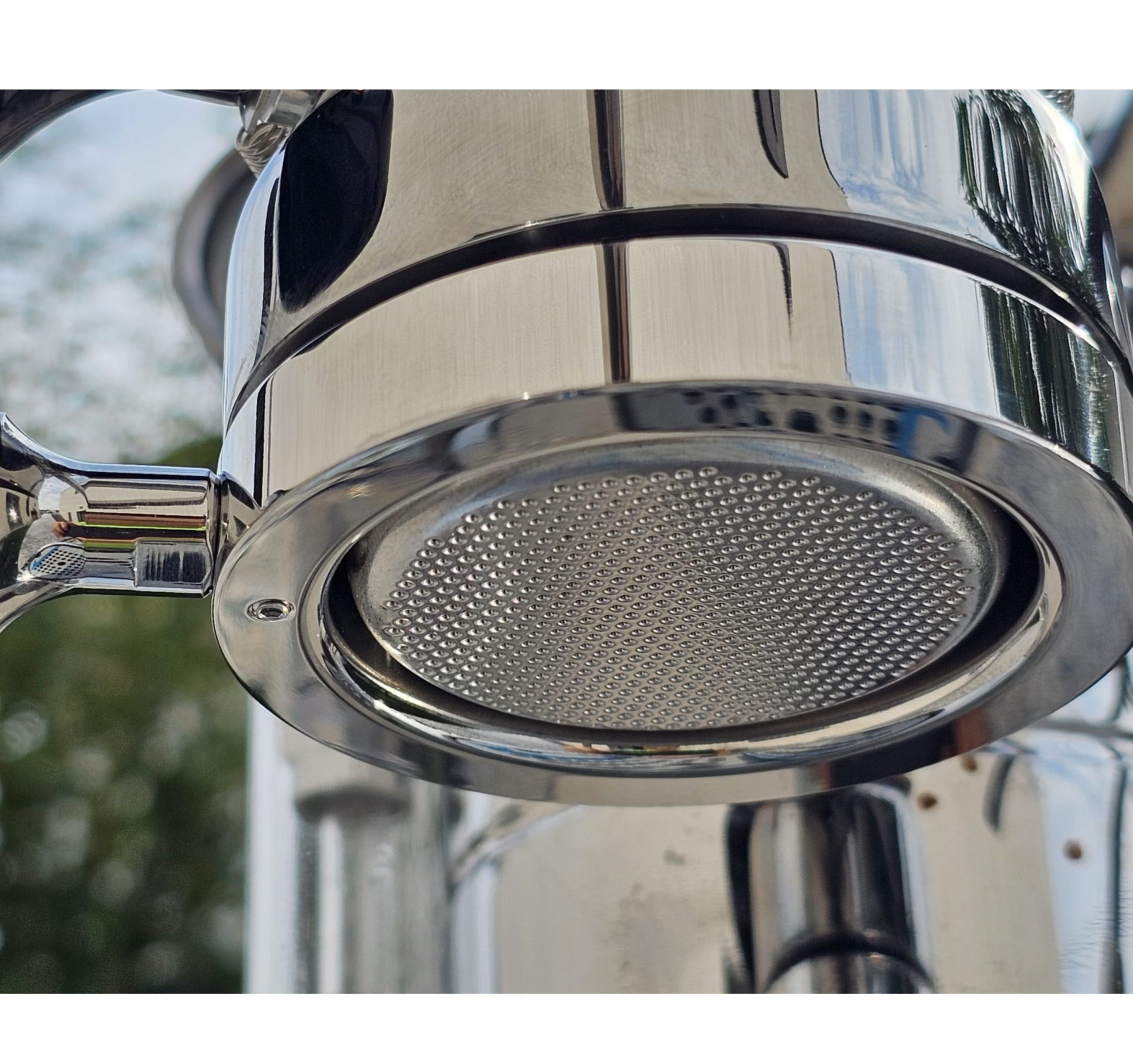
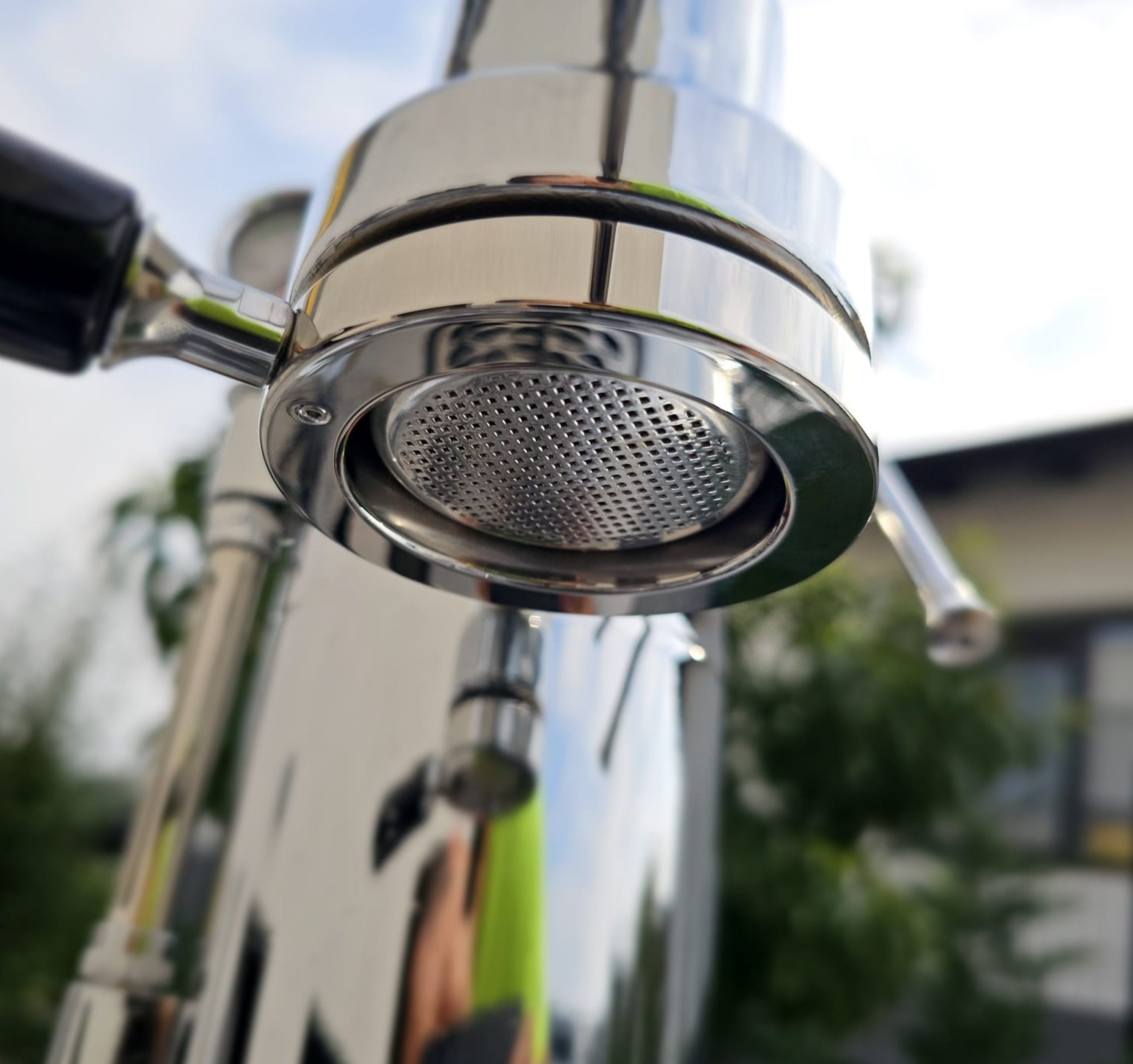
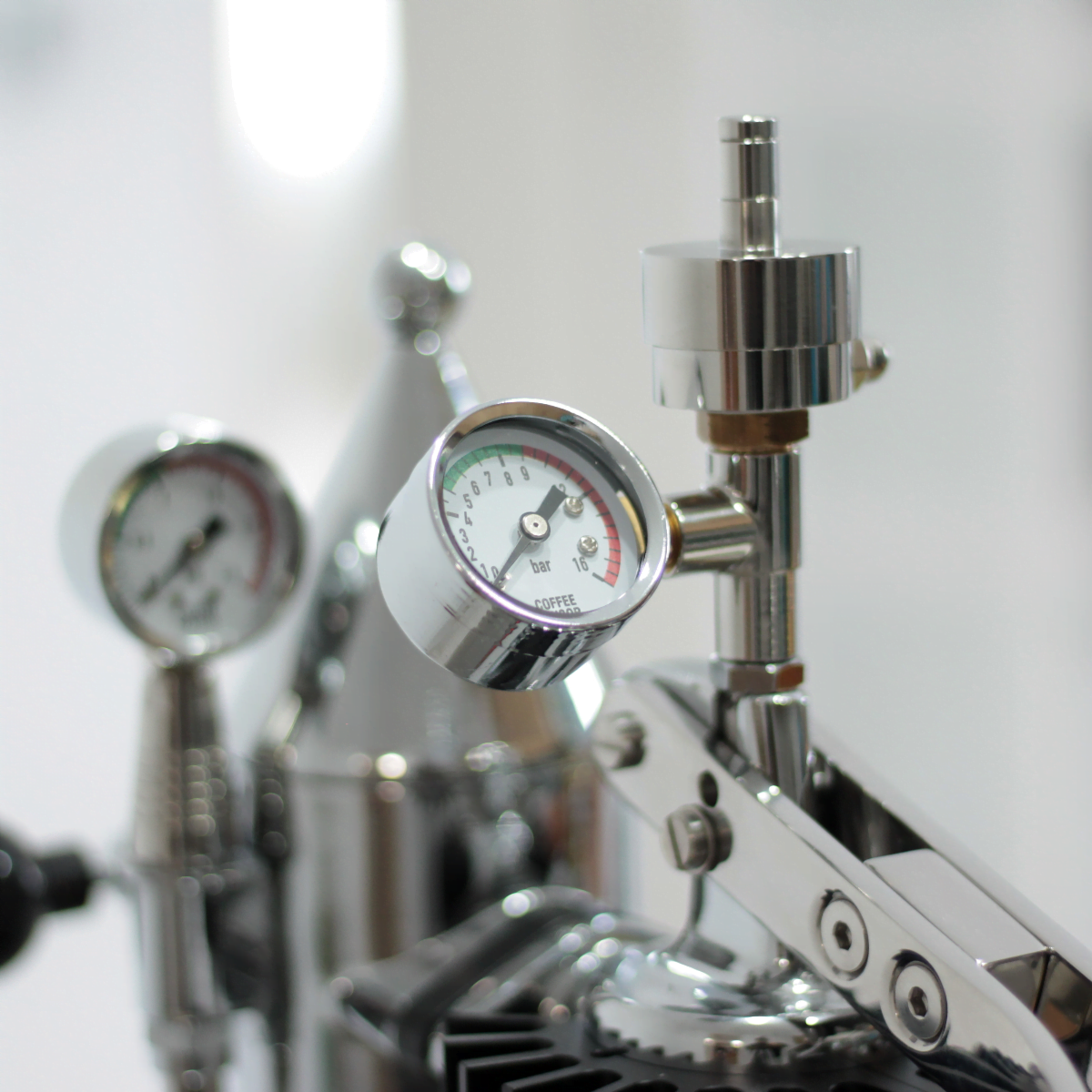
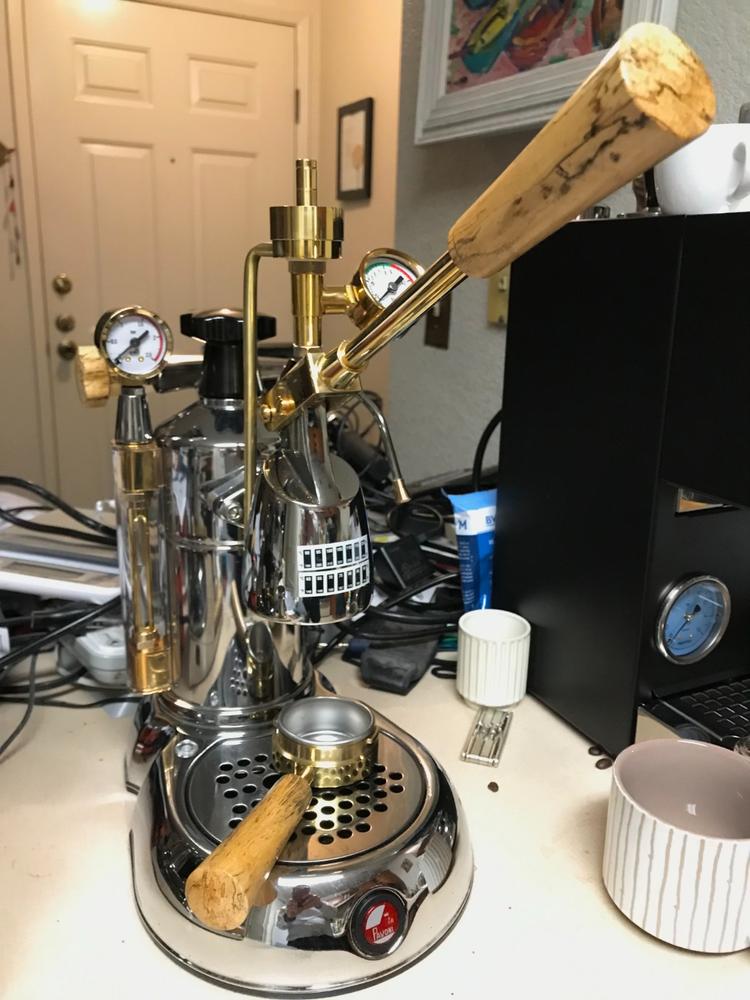
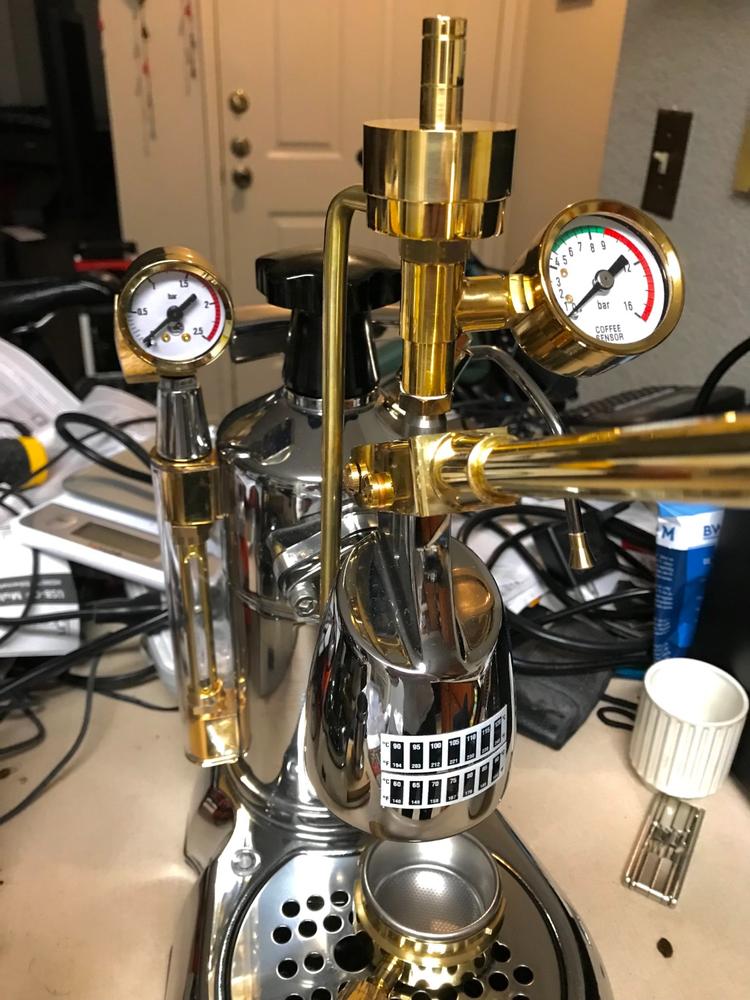
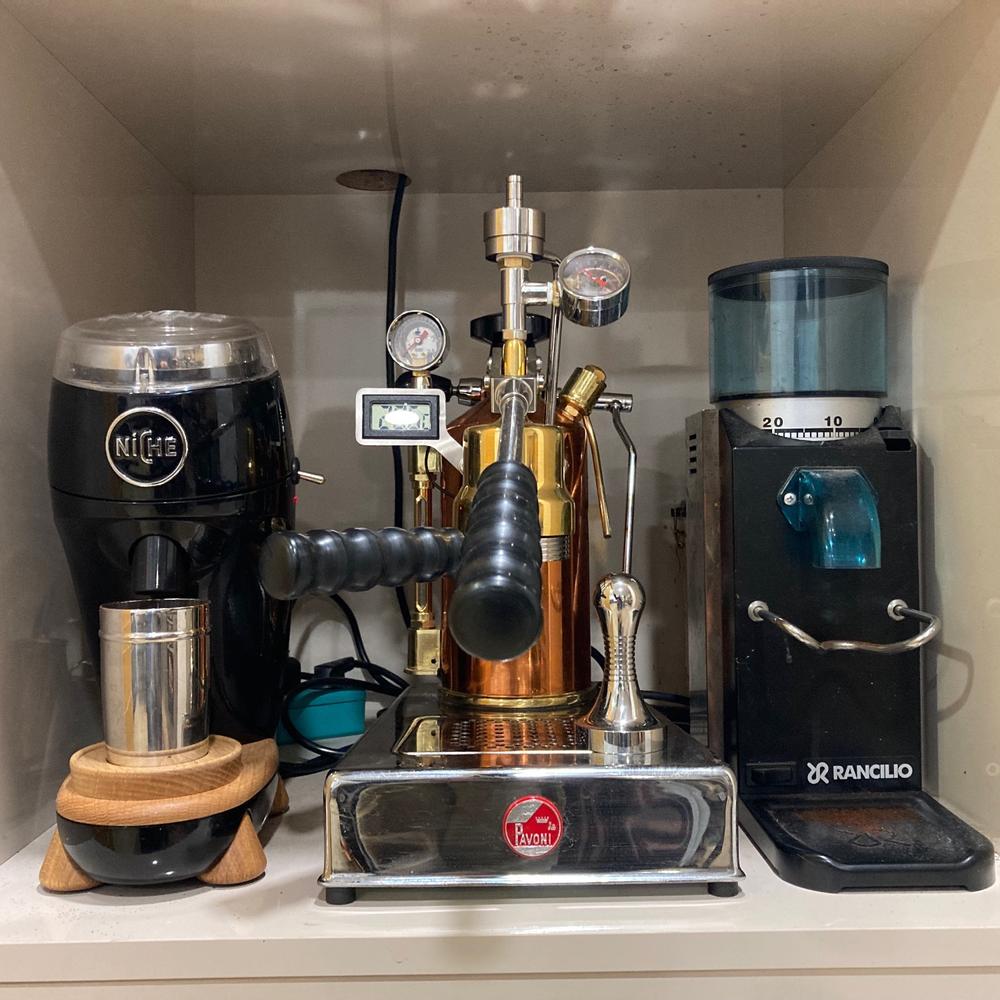
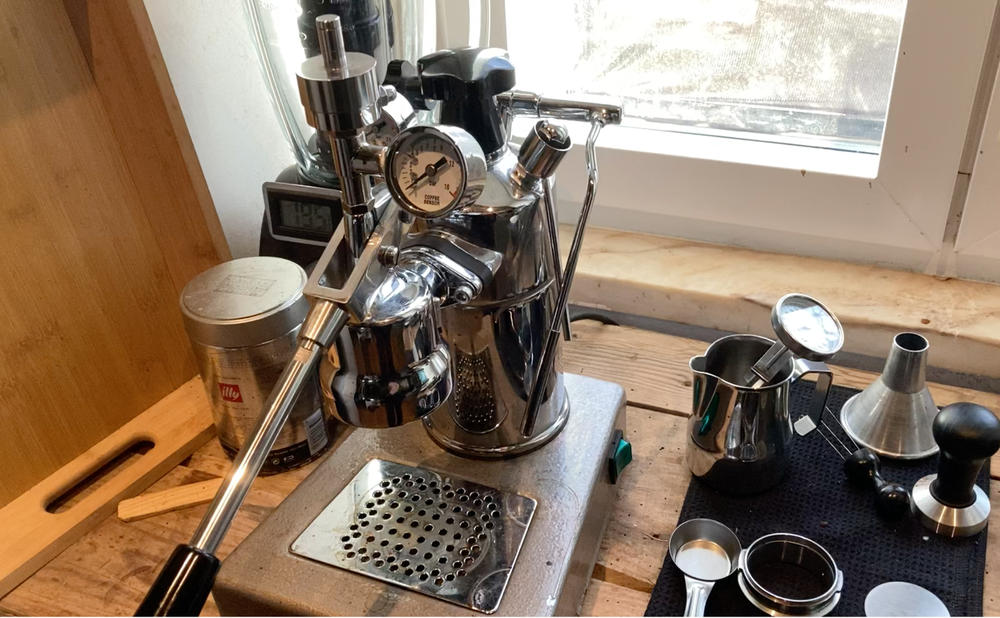
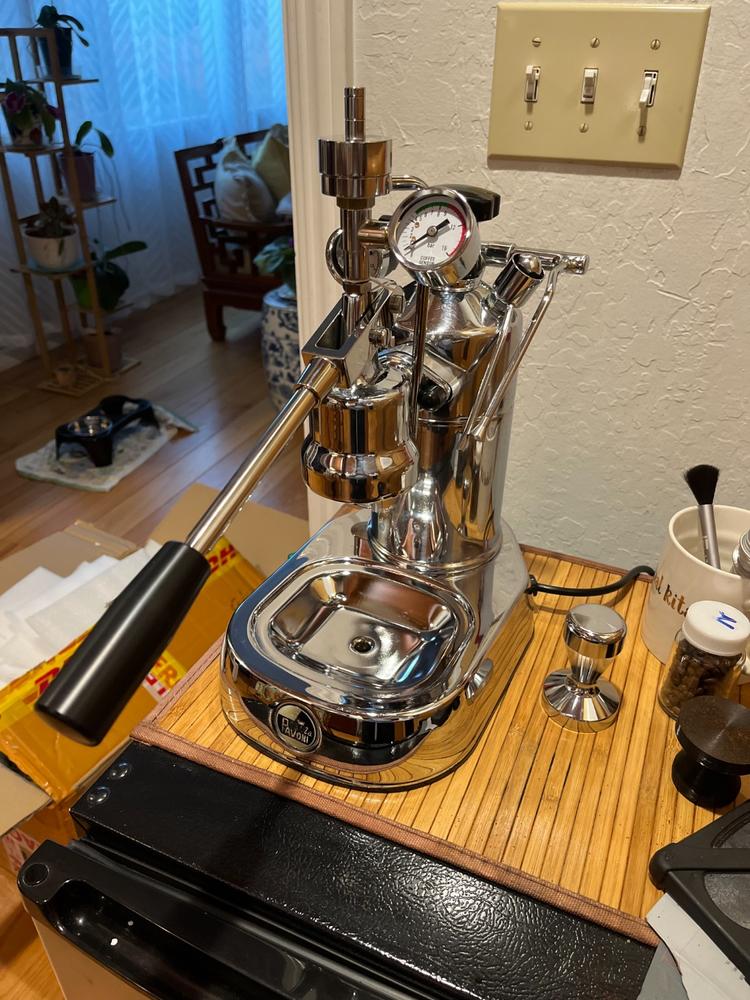
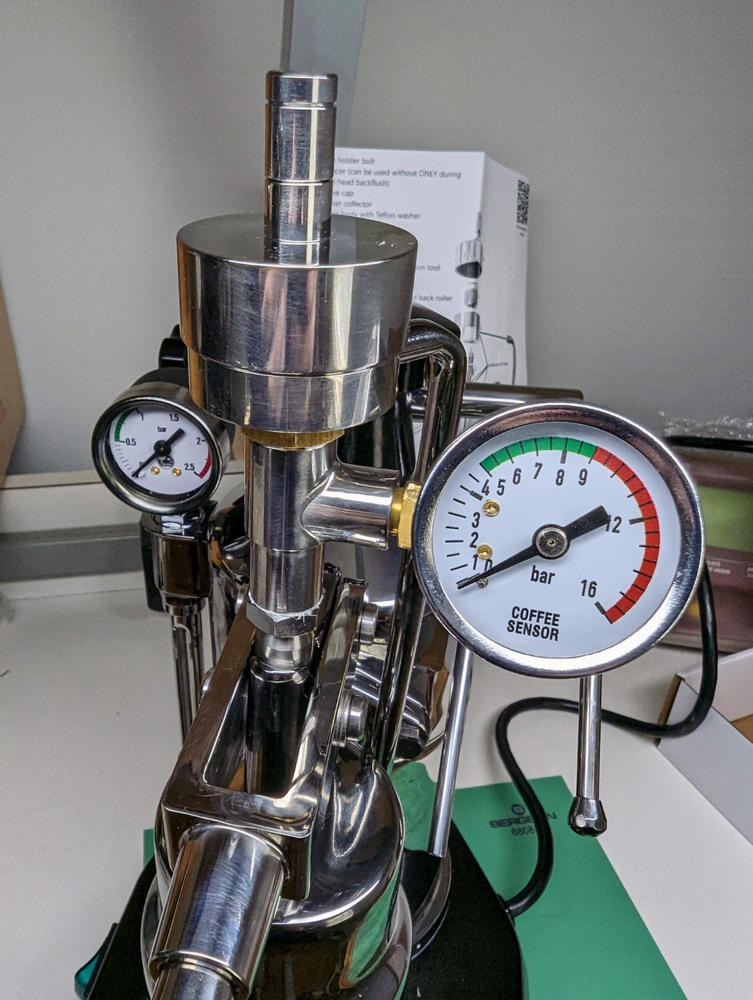
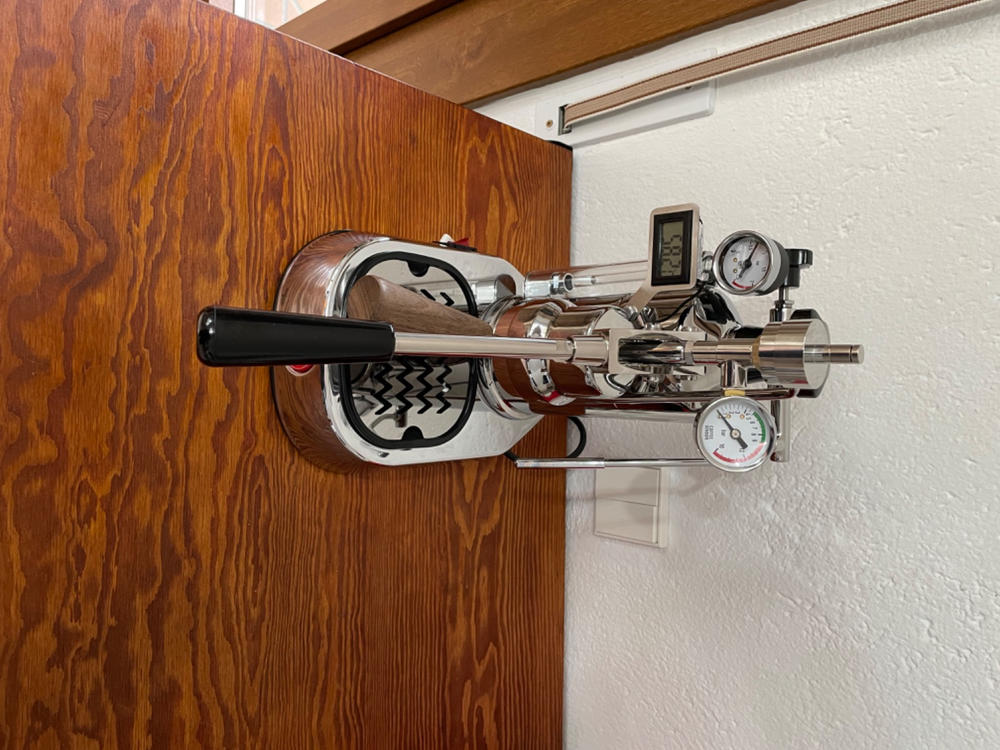
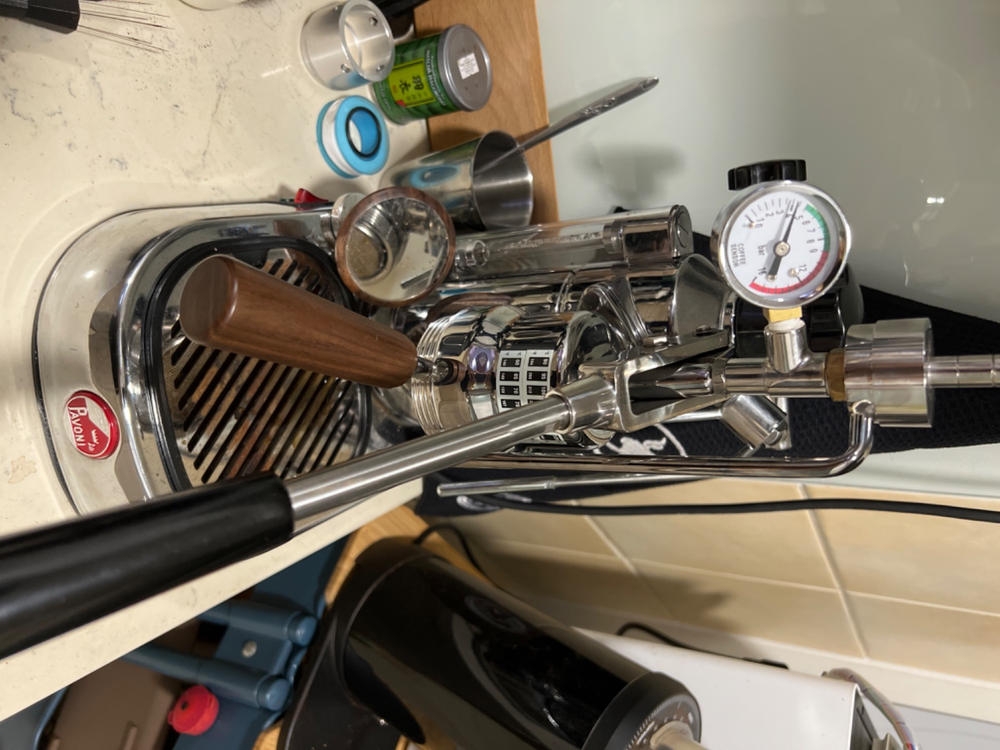
Coffee Sensor AirBuster® release valve and chamber for La Pavoni Lever group heads offers the user:
1. Higher yield volume by flushing out the trapped air from inside the chamber and PPK shaft;
2. No spongy start pulls (immediate pressure feedback on the lever arm);
3. No spongy end pull;
4. Safe and fast PF release (no sneeze) right after your extraction;
5. More accurate control for pressure/flow profiling kit;
6. Non electrical and no batteries needed for operating the Air Buster;
7. Fully automatic – no manual opening or closing of the valve needed;
8. Easy installation (addon on our piston pressure kit is easier then ever);
9. Stainless steel parts and brass valve, all food grade materials;
Also, most recent discoveries from Bong are that:
1. You can insert the portafilter in the group head and then IMMEDIATELY lift the lever without worrying that the puck will be raised.
The air from above the puck will be released with the help of the valve instead of the coffee puck suction that usually can happen.
2. No worries of doing fellinis or 2nd pull. Good for those who love the traditional Italian 14g in 60ml out.
A) Our official installation tutorial is finally here:
B) The tutorial about how to check the AirBuster valve is here – click to view.
The product is created by our special group:
Bong Juachon – Concept idea and design;
Tudor P. from Coffee Sensor – manufacturer / material testing and industrial support;
John Michael Hauck – Tester / Informational, pictures and videos support / CAD support + 2026 manual cap release version design.
Bong J. states clearly, during his volume comparison with and without Air Buster:
The effect of preinfusion / puck saturation was eliminated by simulating a totally saturated puck by mounting a valve that opens at 6bar pressure:
Ave volume with AirBuster® = 43g
Ave volume without AirBuster® = 29.7g
Ave volume % gain = 44.78%
Coffee Sensor AirBuster® release valve and chamber for La Pavoni Lever group heads works only with our original stainless or Gold Brass piston pressure kit.
The height of the AirBuster® is NOT bigger then the height of our original piston pressure kit installed on your machine.
From my dear friend John M. H., we have this great info about Trapped Air & Spongy Pulls we have on La Pavoni Lever standard machines:
When the piston is in the down position, it prevents water from exiting the group head.
To brew espresso, the portafilter is removed, filled with finely ground roasted coffee beans and re-attached to the group head.
The operator begins the brewing process by raising the piston. This movement has multiple effects.
One, is that the upward movement forces some water above the piston back into the hotter boiler.
Another effect is that rising piston creates a vacuum underneath it which is readily filled with air drawn through the dry porous coffee grounds.
Finally, when the piston reaches the top, a hole is exposed on the side of the cylinder, allowing water to enter the area below the piston.
Ideally what would happen next is that all the air under the piston is driven back through the dry coffee grounds, and the area under the piston is filled with just enough water at the perfect temperature for brewing espresso.
Then, the forceful lowering of the piston drives that water through the ground coffee to extract a perfect espresso.
However, many users of direct lever machines will occasionally experience what is called a “spongy pull”.
That is, as they force the piston down with a lever, they notice the lever springs back up if they let go. This is due to some (compressible) air trapped in the area below the piston.
This is not an ideal situation because not enough water will be available for pulling the shot.
Also, when the portafilter is removed, any remaining compressed air may make a mess of things.
It is important to understand that it is steam, not liquid water, that effectively drives out the air underneath the piston.
When the water enters this area, it undergoes a rapid depressurization.
That is, the pressure of the water in the boiler is higher than the pressure of the air under the piston.
The rapid depressurization results in a small percentage of that water turning to steam, known as “flash steam”. While the percentage of water that turns to steam is small, the volume that steam occupies is large.
To better understand this, we can calculate the volume occupied by water that turns to steam, and the volume occupied by the water that remains liquid.
We can then compare these two volumes as a ratio.
By examining chart, we can see that at 105C, the water entering the area under the group head occupies about 15 parts of steam to 1 part liquid water.
In other words. at 105C, enough steam is generated to fill the area under the group head 15 times over.
At 100C or below, none of the water entering the area under the piston turns to steam.
This then is the reason why introducing cooler water into the area under the piston results in spongy pulls.
The remedy of course is to increase the water temperature by, for example, maintaining a higher group head temperature.
However, brewing espresso benefits from water at a temperature in the range of 91-96C to keep it from over-extracting the coffee, which yields a bitter taste.
This intricate knife-edged trade-off of these types of lever machines makes them endearing to many.
With this understanding then, it should be easier to understand the thinking behind the “air buster”.
Kit content:
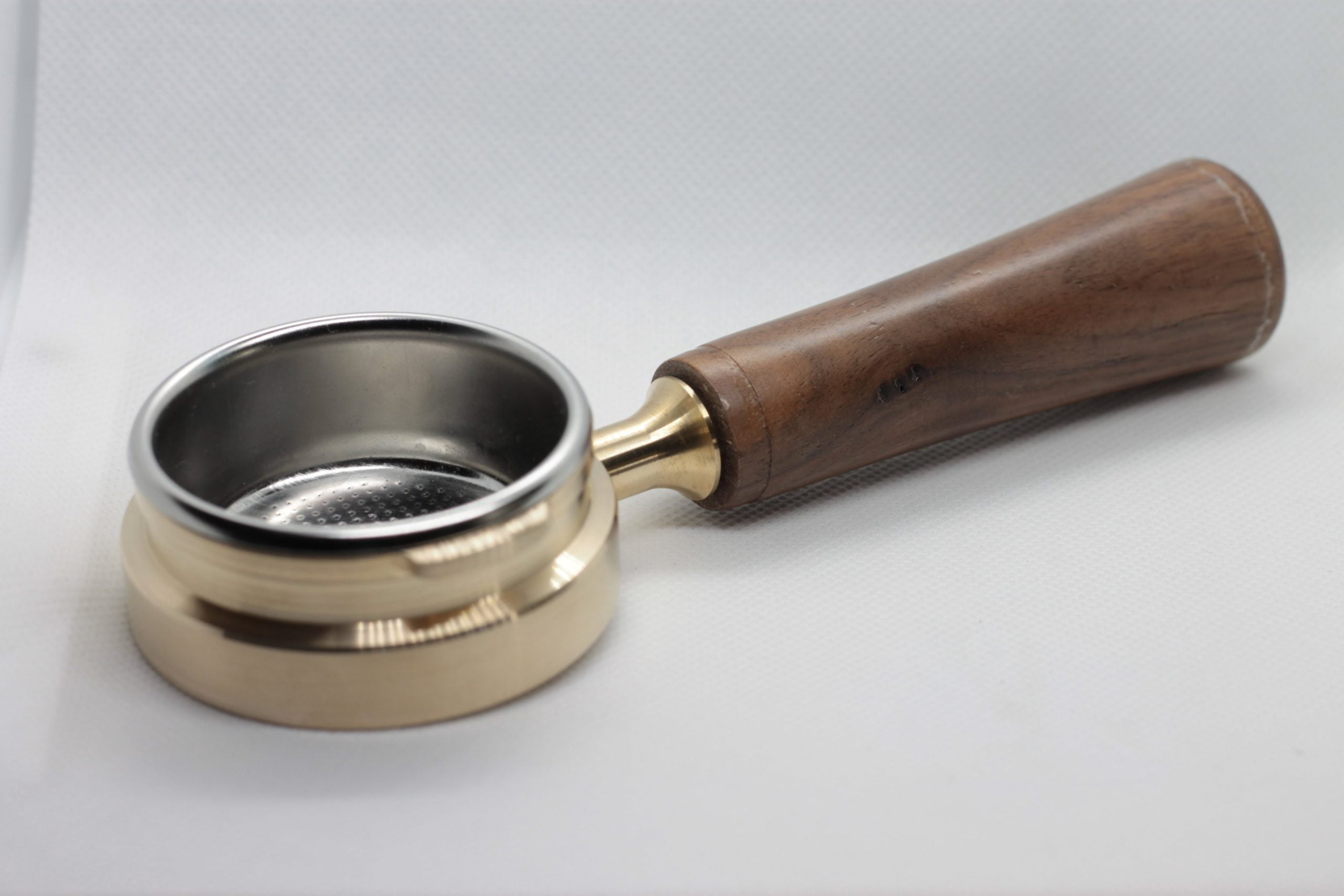
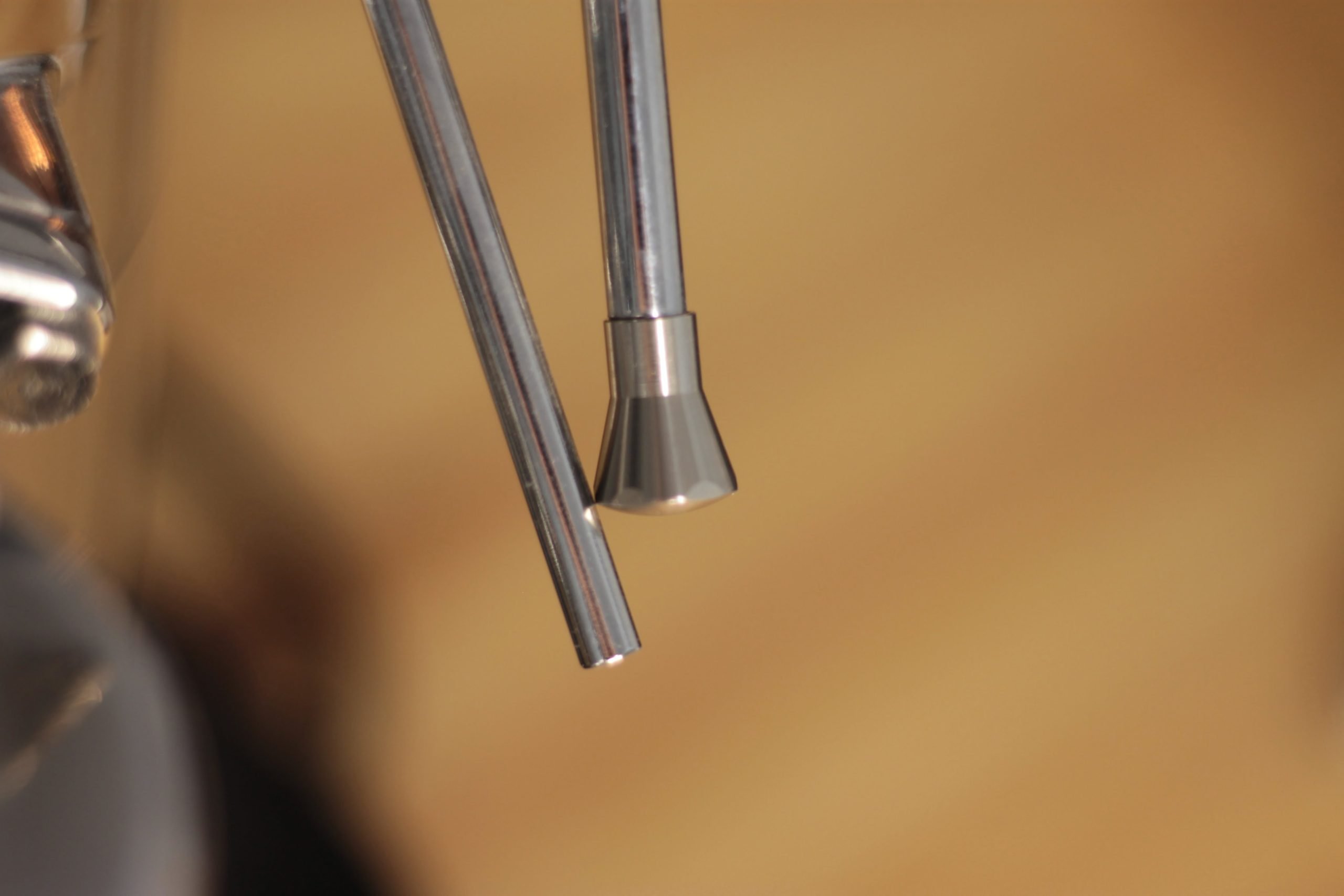
1. AirBuster® release valve (brass);
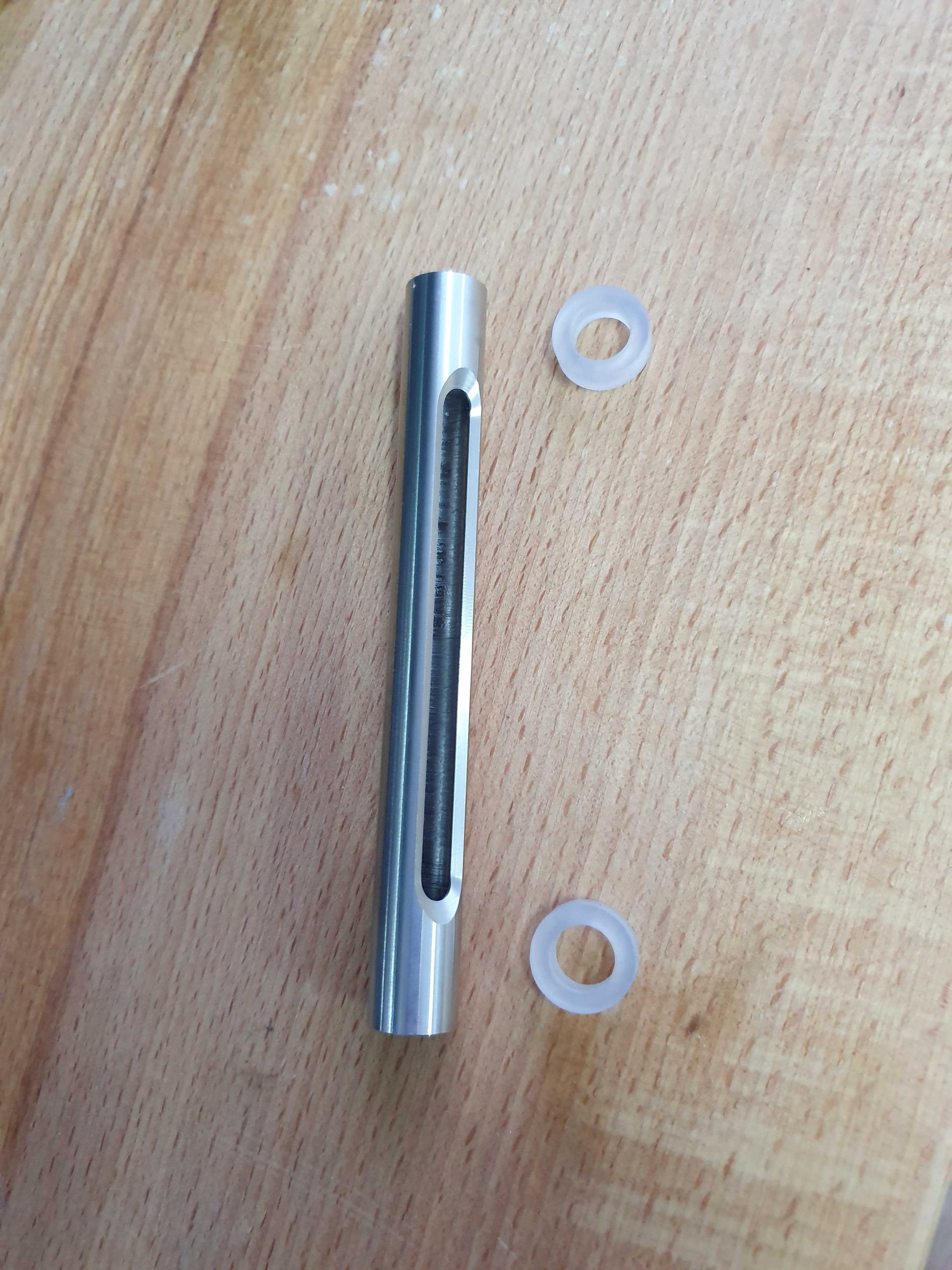
2. AirBuster® chamber for release valve, including the water collector + water cap + gasket for the inside of the cap;
All are made from polished Stainless Steel.
3. One Teflon washer;
4. Teflon tape for sealing purposes;
5. One Left (L) or Right (R) pressure gauge;
6. T shaped connector for shaft + gauge + release valve triple connection;
| Weight | 500 g |
|---|---|
| WITH PPK | STAINLESS PPK INCLUDED, GOLD PPK INCLUDED, NO PPK |
| GAUGE SIDE | LEFT, RIGHT |
| BUSTER BODY COLOR | STAINLESS, GOLD |