


Most american espresso lovers are surprised to learn that nearly 90 percent of machine failures are linked to skipped maintenance routines like backflushing. Clean brewing pathways are essential not just for taste but also for the life of your equipment. Knowing how and why to backflush ensures your espresso never suffers from hidden residue, unwanted flavors, or costly repairs. This guide makes the process clear and manageable so every cup meets your standards.
Table of Contents
- What Is Espresso Machine Backflushing?
- Key Reasons to Backflush Regularly
- How Backflushing Works Step by Step
- Essential Equipment and Cleaning Agents
- Common Mistakes and How to Avoid Them
Key Takeaways
| Point | Details |
|---|---|
| Regular Backflushing | Essential for maintaining espresso machine hygiene and performance, preventing flavor contamination and mechanical failures. |
| Optimal Frequency | Recommended every 2-4 weeks for home machines; more frequently for commercial use to ensure consistent quality. |
| Correct Equipment | Utilize a blind filter basket and professional-grade cleaning detergents to effectively backflush and protect machine components. |
| Avoid Common Errors | Prevent damage by avoiding incorrect cleaning agents, excessive pressure, and irregular maintenance practices. |
What Is Espresso Machine Backflushing?
Backflushing is a critical maintenance technique for espresso machines that helps clean the internal brewing components and ensure consistently high-quality coffee extraction. Think of it like a deep cleaning procedure that removes built-up coffee oils, residue, and potential blockages from your machine’s group head and brewing pathways.
At its core, backflushing involves using a specialized blind filter basket and cleaning detergent to create a high-pressure water and cleaning solution cycle through your espresso machine’s internal brewing mechanism. When performed regularly, this process prevents coffee residue accumulation, maintains optimal machine performance, and prevents potential flavor contamination. Coffee Machine Preventative Maintenance Guide recommends performing this process every 2-4 weeks for home espresso machines and more frequently for commercial equipment.
The process works by blocking the portafilter’s normal water flow and creating a pressurized cleaning cycle. As water cannot escape through the coffee grounds, it forces cleaning solution backward through the group head’s internal valves and pipes. This reverse flow effectively dislodges coffee oils, removes mineral buildup, and prevents potential bacterial growth. Professional baristas consider backflushing an essential ritual for maintaining machine hygiene and ensuring consistent espresso quality.
Key benefits of regular backflushing include:
- Prevents flavor degradation from old coffee oils
- Reduces potential machine wear and tear
- Maintains optimal brewing pressure
- Extends overall espresso machine lifespan
- Ensures consistent espresso extraction quality
Key Reasons to Backflush Regularly
Regular backflushing is not just a recommended maintenance task it’s a critical practice that directly impacts the performance, longevity, and taste quality of your espresso machine. Professional baristas and equipment manufacturers consistently emphasize the importance of this routine cleaning process as a fundamental aspect of machine care.
One of the primary reasons to backflush is preventing flavor contamination. Over time, coffee oils and residue accumulate in the group head and internal valves, which can create rancid flavors that transfer into subsequent espresso shots. Espresso Grouphead Cleaning Steps highlights that these accumulated oils break down quickly and can significantly degrade the taste profile of your coffee if not regularly removed through consistent backflushing.
Beyond taste preservation, backflushing plays a crucial role in maintaining machine mechanics and preventing potential expensive repairs. The high-pressure water cycle helps remove mineral buildup, prevent valve sticking, and ensure all internal components continue functioning smoothly. Without this regular maintenance, espresso machines can experience reduced brewing pressure, uneven extraction, and potentially catastrophic mechanical failures that could require complete machine replacement.
Key technical reasons for regular backflushing include:
- Eliminates trapped coffee oils and residue
- Prevents potential bacterial growth in brewing components
- Maintains consistent brewing pressure
- Reduces risk of internal valve and mechanism degradation
- Extends overall machine operational lifespan
- Ensures consistently high-quality espresso extraction
Professional baristas often compare backflushing to an oil change for an automobile. Just as regular maintenance prevents engine damage, consistent backflushing protects your espresso machine’s intricate internal systems, ultimately saving you money and preserving your investment in high-quality coffee equipment.
How Backflushing Works Step by Step
Backflushing is a precise maintenance technique that requires careful execution to effectively clean your espresso machine’s internal brewing system. The process leverages the machine’s own brewing mechanism to create a high-pressure cleaning cycle that removes built-up coffee residues and prevents potential performance issues.
Espresso Extraction explains that the fundamental principle behind backflushing is creating a controlled, pressurized cleaning environment within the group head. This is achieved by using a blind filter basket that blocks water flow, forcing the cleaning solution to circulate through internal valves and pipes instead of through coffee grounds.
The actual backflushing process involves several critical steps that must be performed with precision. You’ll need specialized cleaning agents designed specifically for espresso machines, typically a professional-grade detergent that breaks down coffee oils and mineral deposits. The technique involves repeatedly running short brew cycles with the blind filter, allowing pressure to build and then release, which creates a powerful flushing action that dislodges accumulated residue from hard-to-reach internal components.
Step-by-step backflushing process:
- Remove regular coffee filter from portafilter
- Insert blind filter basket into portafilter
- Add recommended espresso machine cleaning detergent
- Lock portafilter into group head
- Run short brewing cycle (typically 10 seconds)
- Release pressure and repeat 5-7 times
- Flush with clean water between detergent cycles
- Perform final clean water rinse
Professional baristas recommend performing this maintenance ritual every 1-4 weeks, depending on your machine’s usage frequency.
The key is consistency: regular backflushing prevents long-term buildup and ensures your espresso machine continues producing high-quality shots with optimal flavor and performance.
Essential Equipment and Cleaning Agents
Backflushing requires specific specialized equipment that ensures effective and safe cleaning of your espresso machine’s intricate internal components. Professional baristas understand that using the right tools is just as crucial as the cleaning process itself, with each piece of equipment playing a critical role in maintaining machine performance and longevity.
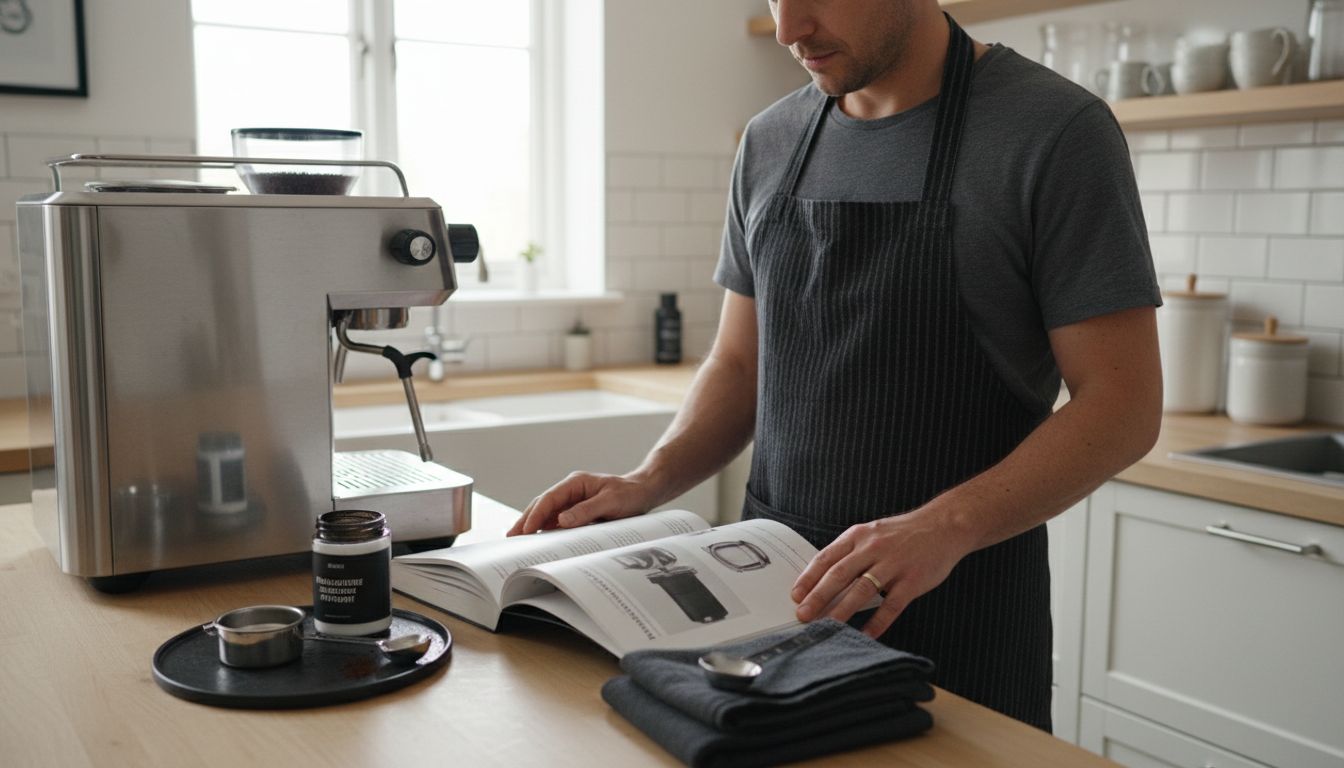
Coffee Machine Preventative Maintenance Guide emphasizes the importance of selecting high-quality, machine-specific cleaning agents and tools. The core equipment needed includes a blind filter basket, specialized espresso machine cleaning detergent, microfiber cloths, and potentially a dedicated backflushing brush for manual cleaning of external components.
The blind filter basket is perhaps the most critical tool in the backflushing process. Unlike standard coffee filter baskets, this specialized component completely blocks water flow, creating the necessary pressure build-up to effectively clean internal valves and pipes. Professional-grade cleaning detergents are specifically formulated to break down coffee oils, mineral deposits, and prevent potential bacterial growth without causing damage to your machine’s delicate internal mechanisms.
Essential backflushing equipment checklist:
- Blind filter basket (specific to your machine model)
- Professional espresso machine cleaning detergent
- Microfiber cleaning cloths
- Backflushing brush
- Measuring spoon for detergent
- Clean water for rinsing
Professional tip: Always consult your espresso machine’s manufacturer guidelines when selecting cleaning agents. Some machines have specific recommendations or restrictions to prevent potential damage to internal components. Investing in high-quality, purpose-made cleaning equipment is far more cost-effective than risking expensive repairs from improper maintenance.
Common Mistakes and How to Avoid Them
Backflushing, while seemingly straightforward, involves several nuanced technical considerations that can significantly impact your espresso machine’s performance and longevity. Many home baristas and even some professionals inadvertently commit errors that can potentially damage their expensive equipment or compromise cleaning effectiveness.
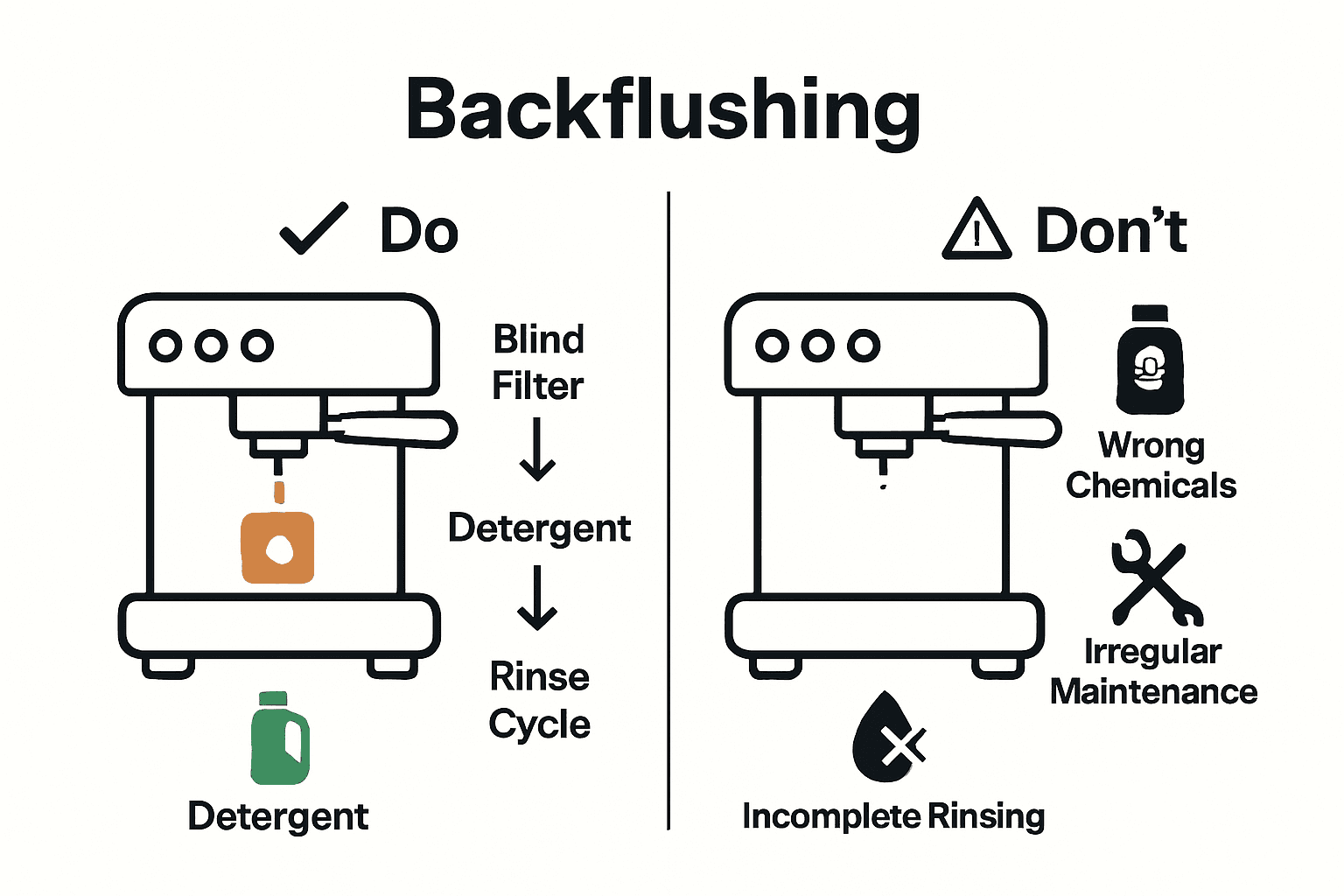
Espresso Grouphead Cleaning Steps highlights that one of the most critical mistakes is using incorrect cleaning agents or inappropriate detergent concentrations. Not all cleaning solutions are created equal, and using generic or inappropriate chemicals can cause serious damage to your machine’s internal seals, gaskets, and precision components. Professional-grade espresso machine cleaners are specifically formulated to break down coffee oils without causing corrosive harm.
Another common pitfall is inconsistent or improper backflushing technique. Many operators either backflush too infrequently, allowing dangerous residue buildup, or backflush too aggressively, which can create unnecessary stress on the machine’s internal mechanisms. The key is developing a consistent, measured approach that balances thorough cleaning with gentle treatment of your equipment’s delicate components.
Common backflushing mistakes to avoid:
- Using household or generic cleaning chemicals
- Applying incorrect water temperature
- Neglecting to rinse thoroughly between cycles
- Skipping manufacturer-recommended maintenance intervals
- Applying excessive pressure during cleaning
- Ignoring visible wear on machine components
- Failing to dry components after cleaning
Professional baristas understand that backflushing is as much an art as a science.
 Approach the process with patience, precision, and respect for your machine’s intricate engineering. When in doubt, always consult your espresso machine’s specific manufacturer guidelines and consider professional maintenance if you’re uncertain about any aspect of the cleaning process.
Keep Your Espresso Machine Performing at Its Best with Expert Parts and Care
Maintaining your espresso machine through regular backflushing is essential to prevent flavor degradation and mechanical wear. The challenge is keeping your machine clean while using the right tools and replacement parts designed for optimal performance. Avoid common pitfalls like using the wrong cleaning agents or ignoring worn components. Elevate your maintenance routine with precision accessories such as professional-grade gaskets, blind filter baskets, and pressure gauges that ensure consistent brewing pressure and longer machine lifespan.

Discover high-quality parts and trusted restoration services tailored for brands like La Pavoni and Olympia Cremina at Coffee Sensor. Don’t wait until residue buildup affects your espresso quality. Take control of your machine’s health today by visiting our main site and exploring our specialized product range. Your espresso deserves the best care every day.
Frequently Asked Questions
What is backflushing for an espresso machine?
Backflushing is a maintenance procedure that cleans the internal brewing components of an espresso machine by using a blind filter basket and cleaning detergent to cycle a high-pressure cleaning solution through the machine. This helps to remove coffee oils, residue, and blockages to maintain optimal performance and flavor quality.
How often should I backflush my espresso machine?
It is recommended to backflush home espresso machines every 2-4 weeks, while commercial machines may require more frequent backflushing depending on usage. Regular maintenance helps to prevent the buildup of coffee residue that can impact flavor and machine performance.
What equipment do I need to backflush my espresso machine?
Essential equipment for backflushing includes a blind filter basket specific to your machine, professional-grade espresso machine cleaning detergent, microfiber cloths, and optionally a backflushing brush for cleaning external components. Proper tools ensure effective and safe cleaning of the machine.
What are the benefits of regular backflushing?
Regular backflushing helps prevent flavor contamination from old coffee oils, maintains consistent brewing pressure, reduces machine wear and tear, and extends the overall lifespan of your espresso machine. It ensures high-quality espresso extraction with each shot.


